
Excavation Services in West Jordan, UT
AccuRite Excavation provides excavation, grading, and utility work in West Jordan, Utah. Serving both newer west-side development and established east-side neighborhoods near the Jordan River. Call (801) 814-6975.
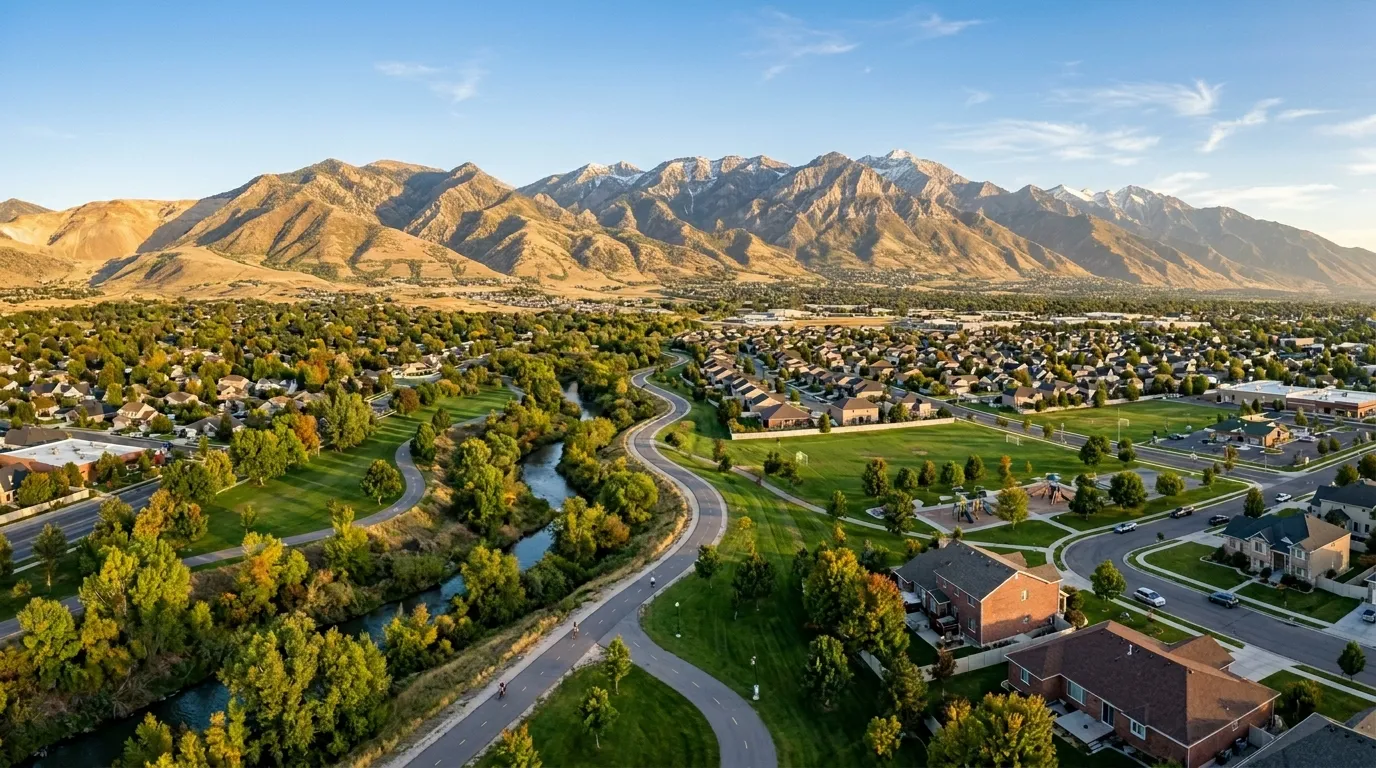
West Jordan spans roughly seven miles from the Jordan River to the Oquirrh Mountain foothills, and the ground changes meaningfully across that distance. The established eastern neighborhoods were built on river-influenced alluvial soil — decent for building but comes with water table considerations. The booming western side, where new subdivisions have consumed thousands of acres over the past two decades, sits on Oquirrh Mountain alluvial fan material that behaves differently in every important way. AccuRite Excavation works both sides of this city and adjusts our approach based on where the project sits.
East Side: Established Neighborhoods and the Jordan River
West Jordan’s eastern neighborhoods — the areas along Redwood Road, 1300 West, and the streets approaching the river — were built primarily in the 1980s and 1990s. These homes are now 30 to 40 years old, which is the age when clay-affected foundations start showing problems and original utility lines begin to fail.
The soil is silty clay with alluvial influence from the Jordan River. It’s workable material that digs without hammering, but it holds moisture and moves with the seasons. Foundation walls in these neighborhoods commonly show diagonal cracking from the clay’s expansion and contraction cycles. When repair is needed, we provide residential excavation along the foundation wall to expose the footing, allowing repair contractors access to waterproof, reinforce, or underpin the foundation.
The Jordan River’s proximity raises the water table on the east side, particularly in spring when snowmelt from the Wasatch and Oquirrh ranges feeds the river system. Properties within a few blocks of the river corridor may need dewatering during excavation, and some fall within FEMA-designated flood zones that impose additional foundation requirements.
Utility Replacement
Original sewer laterals, water service lines, and storm drains in east-side neighborhoods are approaching their expected service life limits. We handle underground utility replacement on residential properties throughout these established areas. Clay soil demands proper bedding and compaction for new pipe installations — the native soil alone doesn’t provide stable support.
West Side: The Growth Corridor
Western West Jordan has been one of the most active residential development areas in Salt Lake County. Subdivisions along 7300 West, the Copper Hills area, and the neighborhoods approaching the Mountain View Corridor have transformed former agricultural and open land into residential communities.
The soil on the west side is fundamentally different from the east. Oquirrh Mountain alluvial fan deposits brought coarser material down from the mountains — gravel, sand, and rocky debris mixed with clay. This material is generally better for building than the valley floor lake clay, with better drainage and more stable bearing characteristics.
But the west side has its own challenge: caliche. This calcium carbonate cemented layer appears at varying depths across western West Jordan and western Salt Lake County in general. Caliche is tough to dig — it doesn’t respond to a standard bucket and often needs ripping or hammering. It also doesn’t drain, so water perches above it and can cause problems for foundations and landscaping.
We identify caliche during site evaluation and plan the excavation to either break through it or remove it where it interferes with drainage and foundation performance.
New Construction Excavation
For new homes on the west side, we handle the complete excavation scope: residential lot grading, foundation excavation, utility connection trenching, and final grade. The coarser soils on the west side compact differently than clay and require specific moisture and energy inputs to achieve the density specifications required by project engineers.
The 7800 South Commercial Corridor
The 7800 South corridor is West Jordan’s primary commercial artery, running east-west across the city. Commercial excavation along this corridor includes site prep for retail and office development, parking lot subgrade preparation, and utility installation for commercial connections.
Commercial work along 7800 South and the Bangerter Highway corridor requires attention to traffic management, utility coordination with multiple providers, and compliance with city stormwater requirements. We plan commercial excavation to keep traffic moving and minimize disruption to adjacent businesses.
Bangerter Highway Growth
The Bangerter Highway corridor through West Jordan has driven both commercial and residential development. Properties along this corridor benefit from accessibility but face the typical challenges of Oquirrh alluvial fan soil — variable composition, potential caliche layers, and the need for engineered soil preparation under commercial structures.
Common West Jordan Projects
The mix of excavation work in West Jordan is broad:
- New home foundations on the west side growth corridor
- Foundation repair excavation on aging east-side homes
- Utility replacement in established neighborhoods
- Commercial site prep along 7800 South and Bangerter Highway
- Retaining walls on west-side lots with grade changes near the Oquirrh foothills
- Stormwater infrastructure for new development
Serving West Jordan and Southwest Salt Lake Valley
West Jordan borders South Jordan to the south, Taylorsville to the north, and West Valley City to the northwest. We work throughout the southwest Salt Lake Valley. Whether you need demolition, hauling and delivery, or grading and land clearing, call (801) 814-6975 for a free estimate on your West Jordan project.
Soil Conditions in West Jordan
West Jordan's soil tells the story of two different geological forces. The eastern side near the Jordan River sits on alluvial and lake deposits — silty clay with moderate drainage and a water table influenced by the river. Moving west, the ground transitions to Oquirrh Mountain alluvial fan deposits — coarser material with more gravel and sand, and eventually rocky alluvium on the far west side near the mountain front. Some areas in western West Jordan also have caliche layers — calcium carbonate cemented soil that resists digging and doesn't drain well.
Permits & Regulations
West Jordan City handles building and excavation permits through its Planning and Building Department. Foundation work, retaining walls over four feet, and utility trenching require permits. New subdivision development goes through the city's planning review process for grading and stormwater management. West Jordan has been proactive about stormwater regulations due to the Jordan River watershed requirements. We coordinate permits and inspections as part of every project.
Excavation Services in West Jordan
Residential Excavation
Foundation digs, basement excavation, grading, and site preparation for homes across the Wasatch Front.
Learn moreCommercial Projects
Large-scale commercial excavation including building pads, parking lots, subdivisions, and multi-family developments.
Learn moreGovernment Projects
Government and military excavation contracts with security clearance, bonding, and full compliance.
Learn moreRock Walls & Retaining Walls
Engineered boulder retaining walls and decorative rock walls for residential and commercial properties along the Wasatch bench.
Learn moreUnderground Utilities
Water lines, sewer lines, storm drain, gas, and utility trenching for residential and commercial projects.
Learn moreGrading & Land Clearing
Land grading, lot clearing, and site preparation for residential and commercial construction projects.
Learn moreLand Clearing
Lot clearing, tree and brush removal, stump removal, and site clearing across Weber and Davis counties.
Learn moreDemolition
Residential and commercial structure demolition, concrete removal, and debris hauling.
Learn moreSeptic Systems
Septic tank installation, repair, replacement, and perc testing for rural properties in Northern Utah.
Learn moreHauling & Delivery
Material delivery (gravel, topsoil, fill dirt, sand) and debris removal/hauling services.
Learn moreWater Features & Ponds
Custom pond construction, waterfalls, water gardens, and decorative water feature excavation.
Learn moreExcavation FAQs for West Jordan
What soil challenges exist in western West Jordan?
How does the Jordan River affect east-side excavation?
What types of excavation projects are most common in West Jordan?
Also Serving Nearby Cities
Start Your West Jordan Project Today
Call Shawn directly or request a free estimate for your West Jordan excavation project.