
Excavation Services in Draper, UT
AccuRite Excavation serves Draper, Utah with excavation, retaining walls, and hillside site prep. Point of the Mountain expertise, tech corridor development, and premium residential lots. Call (801) 814-6975.
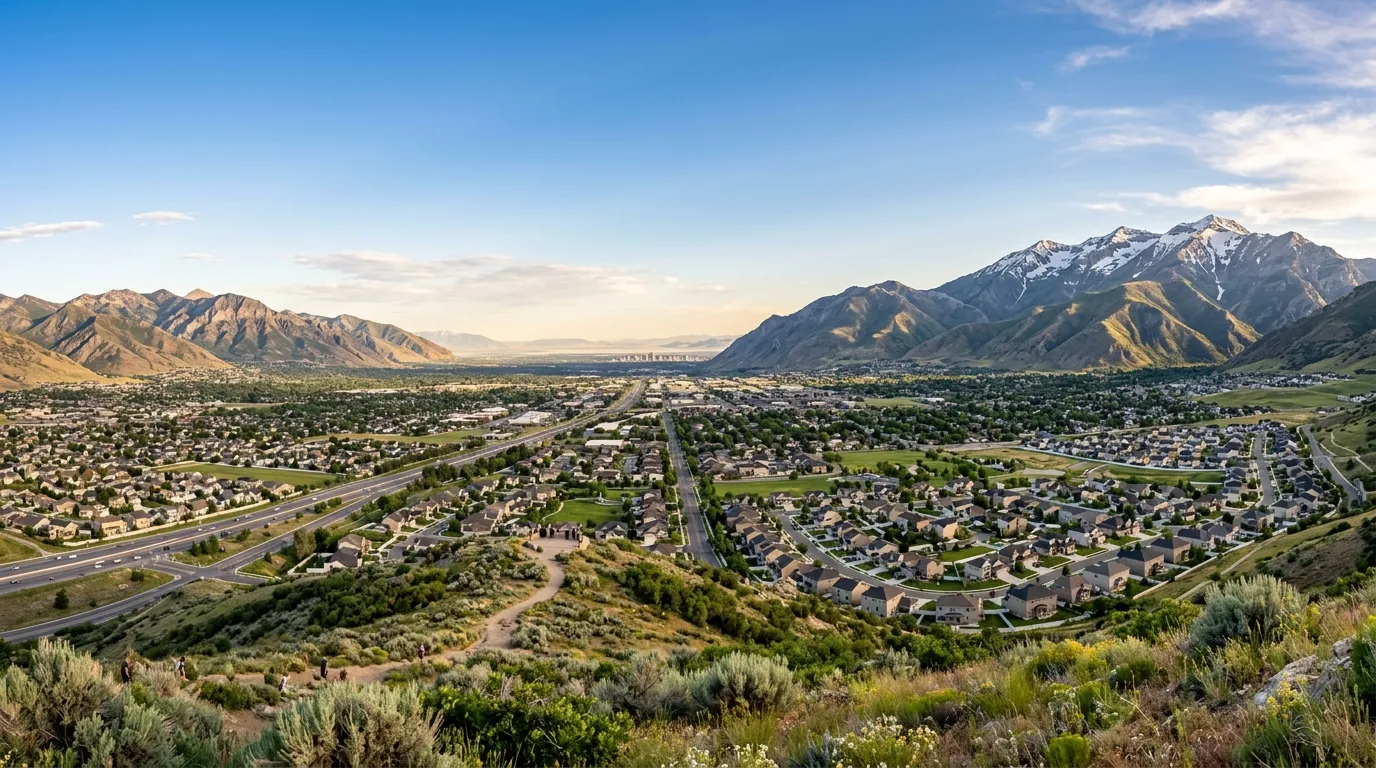
Draper occupies the spot where the Salt Lake Valley narrows to a point between the Wasatch Range and the Traverse Mountains. It’s a geography that creates both premium home sites and premium excavation challenges. The hillside lots along the eastern mountain front and the Point of the Mountain slopes command some of the highest home values in the valley, and they demand excavation work that matches — technically complex, heavily engineered, and carefully executed. AccuRite Excavation has done this caliber of work throughout our career and brings it to Draper’s demanding terrain.
Point of the Mountain: A Different Kind of Rock
The Traverse Mountains at the Point of the Mountain are geologically distinct from the Wasatch Range. While the Wasatch is predominantly granite, quartzite, and limestone, the Traverse Range is a mix of volcanic and sedimentary rock — welded tuff, conglomerate, and layered deposits that were formed under very different conditions.
What this means for excavation is unpredictability. Wasatch rock is hard but consistent. Traverse Mountain rock varies from layer to layer — you might go from crumbly volcanic ash to rock-hard welded tuff within the same trench. Some layers are stable when exposed; others deteriorate quickly when opened to air and water, which has slope stability implications.
Geotechnical evaluation is not optional on Traverse Mountain properties. The geotech report tells us what layers we’ll encounter, how they’ll behave, and what retaining and stabilization methods are needed. We coordinate with geotechnical engineers before pricing and planning any Point of the Mountain hillside project.
Retaining Wall Engineering
Retaining walls on Traverse Mountain properties need engineering specific to the local geology. The varying rock stability means wall foundations have to be designed for the actual bearing conditions at each location, not assumed from standard tables. Wall drainage is critical because water perching on impermeable layers can build hydrostatic pressure behind walls.
We build walls on Point of the Mountain properties using both natural rock and engineered segmental block systems. The choice depends on the wall height, the loads, and the geological conditions at the specific location. Taller walls in the Traverse Range typically use engineered block with geogrid reinforcement because the loads and stability requirements exceed what natural rock construction can provide.
Wasatch Foothills: Draper’s East Side
Draper’s eastern side climbs into the Wasatch foothills with the same glacial and alluvial geology found in Sandy to the north. The neighborhoods east of 1300 East and approaching the mouth of Corner Canyon sit on rocky alluvial deposits — granite cobble, quartzite fragments, and coarse gravelly sand.
Corner Canyon has become one of Draper’s premier residential areas, with custom homes on large lots that back up to open space and trail systems. These properties require significant site preparation, including grading and land clearing before the foundation work begins:
- Foundation excavation through rock and glacial deposits
- Cut-and-fill earthwork on sloped lots
- Retaining walls to manage grade changes
- Hillside drainage systems
- Driveway construction on steep approaches
The residential excavation on Draper’s east side is similar to what we do in the Sandy foothills — rock-intensive, equipment-heavy, and carefully planned around the terrain.
The Tech Corridor
Draper’s I-15 corridor has become one of Utah’s primary tech hubs, with major employers and office development concentrated along the freeway and Bangerter Highway. This commercial development sits on the flat valley floor — Bonneville clay and alluvial deposits that are straightforward to excavate compared to the hillside terrain.
Commercial site preparation in the tech corridor involves mass grading, foundation excavation for large-footprint buildings, parking structure work, and utility installation at commercial scale. We handle these projects with the equipment and crew capacity needed for the larger scope.
The corridor also sees ongoing redevelopment as older commercial properties get demolished and rebuilt to serve the tech economy. We provide demolition and site clearing for these redevelopment projects.
Draper’s Permit Requirements
Draper City takes hillside development seriously, and the permit requirements reflect it. Hillside zone properties require:
- Geotechnical investigation and report
- Grading plan prepared by a licensed engineer
- Cut-and-fill calculations within allowable limits
- Slope stability analysis
- Stormwater management plan
- Retaining wall engineering for walls over four feet
We coordinate all of these requirements before starting work. Hauling and material removal is built into every hillside project scope, as the volume of cut material on Draper’s upper lots is significant. The permit process for hillside properties takes longer than flat land projects, and we factor that timeline into project planning.
Serving Draper and the Point of the Mountain
Draper borders Sandy to the north and shares the Point of the Mountain area with Herriman and Lehi. We work throughout the south valley. The terrain varies significantly across Draper’s geography, and we bring the right equipment and approach for each specific location.
Call (801) 814-6975 for a free estimate on your Draper project. Whether it’s a hillside custom home, a tech corridor commercial building, or a residential addition, we’ll evaluate the site and give you a plan that fits the ground.
Soil Conditions in Draper
Draper's soil varies dramatically across its geography. The flat I-15 corridor has valley floor clay and alluvial deposits. The Wasatch foothills on the east have glacial moraine and alluvial fan deposits similar to Sandy — rocky, gravelly material with granite boulders near the canyon mouths. The Traverse Mountains at the Point of the Mountain present a different geology entirely — decomposed volcanic rock, welded tuff, and sedimentary layers that behave unpredictably during excavation. Each area requires its own approach.
Permits & Regulations
Draper City processes excavation and building permits through its Community Development Department. The city has extensive hillside development standards that govern excavation on sloped properties, including geotechnical report requirements, cut-and-fill limitations, and slope stability standards. Retaining walls over four feet require engineering and permits. Projects in the Point of the Mountain area may have additional Traverse Mountain development standards. We navigate Draper's permit requirements and coordinate required engineering reports as part of every project.
Excavation Services in Draper
Residential Excavation
Foundation digs, basement excavation, grading, and site preparation for homes across the Wasatch Front.
Learn moreCommercial Projects
Large-scale commercial excavation including building pads, parking lots, subdivisions, and multi-family developments.
Learn moreGovernment Projects
Government and military excavation contracts with security clearance, bonding, and full compliance.
Learn moreRock Walls & Retaining Walls
Engineered boulder retaining walls and decorative rock walls for residential and commercial properties along the Wasatch bench.
Learn moreUnderground Utilities
Water lines, sewer lines, storm drain, gas, and utility trenching for residential and commercial projects.
Learn moreGrading & Land Clearing
Land grading, lot clearing, and site preparation for residential and commercial construction projects.
Learn moreLand Clearing
Lot clearing, tree and brush removal, stump removal, and site clearing across Weber and Davis counties.
Learn moreDemolition
Residential and commercial structure demolition, concrete removal, and debris hauling.
Learn moreSeptic Systems
Septic tank installation, repair, replacement, and perc testing for rural properties in Northern Utah.
Learn moreHauling & Delivery
Material delivery (gravel, topsoil, fill dirt, sand) and debris removal/hauling services.
Learn moreWater Features & Ponds
Custom pond construction, waterfalls, water gardens, and decorative water feature excavation.
Learn moreExcavation FAQs for Draper
What makes Point of the Mountain excavation unique?
How expensive is hillside excavation in Draper?
Does AccuRite work on Draper tech corridor projects?
Also Serving Nearby Cities
Start Your Draper Project Today
Call Shawn directly or request a free estimate for your Draper excavation project.