
Excavation Services in Cottonwood Heights, UT
AccuRite Excavation serves Cottonwood Heights, Utah with hillside excavation, retaining walls, and foundation work. Located at the mouth of Big and Little Cottonwood Canyons — premium terrain, premium preparation. Call (801) 814-6975.
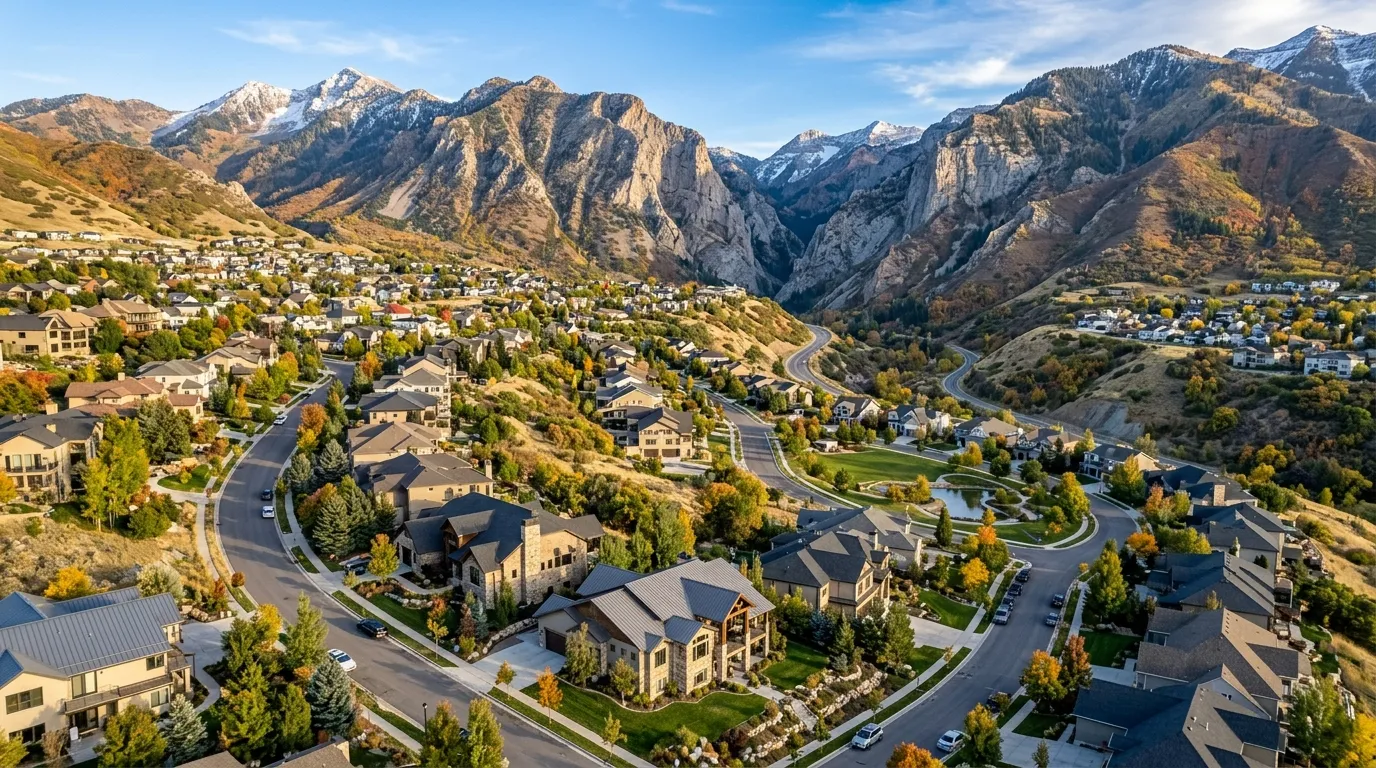
Cottonwood Heights exists because of the canyons. Big Cottonwood and Little Cottonwood carved their way through the Wasatch Range, and the glaciers that occupied them pushed millions of tons of rock, gravel, and sand out onto the valley floor at their mouths. That glacial debris became the terrain that Cottonwood Heights is built on — and it makes this one of the most challenging and rewarding places to do excavation work in the Salt Lake Valley.
Glacial Moraine: Beautiful Ground, Hard Digging
The glacial moraine deposits under Cottonwood Heights are fundamentally different from the Lake Bonneville clay that covers most of the valley floor. Where clay is uniform and predictable (if problematic), moraine is chaotic. A single foundation trench might go through fine sand, then hit a two-ton granite boulder, then pass through gravel, then find another boulder.
This unpredictability is the defining challenge. You can’t schedule moraine excavation the way you schedule clay digging. We plan timelines conservatively and bring rock-breaking equipment to every Cottonwood Heights job because the question isn’t whether we’ll hit boulders — it’s how many and how big.
Our hydraulic hammers break boulders in place when they can’t be removed whole. For particularly large stones, we may need to drill and split them. The broken material gets loaded and hauled off or, in some cases, salvaged for use in retaining walls and landscaping on the same property. Granite from the Cottonwood Canyons makes excellent wall stone.
The Upside of Moraine
For all its excavation difficulty, glacial moraine is superb building ground. The coarse, gravelly material drains freely — there are no water table problems, no hydrostatic pressure against basement walls, no seasonal soil movement. Foundations built on properly prepared moraine stay dry and stable for the life of the structure. This is the opposite of the clay-driven foundation problems that plague valley floor homes.
The moraine also provides excellent bearing capacity. A foundation footing on compacted moraine can support significantly more load than one on clay, which gives structural engineers more options and homeowners more confidence.
Canyon-Mouth Properties
The properties closest to the mouths of Big Cottonwood and Little Cottonwood Canyons sit on the coarsest, rockiest moraine material. These upper Cottonwood Heights lots have the most dramatic views and the most demanding excavation conditions. Boulder frequency increases near the canyon mouths, and some lots have boulders visible on the surface before digging even begins.
Custom homes on these properties are significant investments — both in the home and in the site preparation that makes building possible. We provide comprehensive site preparation:
- Foundation excavation with boulder management and rock hammering
- Cut-and-fill earthwork to create level building pads on sloped terrain
- Retaining walls engineered for the specific soil and grade conditions
- Driveway construction including cuts through moraine and grade management
- Drainage systems — though the moraine drains well, concentrated runoff from impervious surfaces needs to be routed
Wasatch Boulevard Corridor
Wasatch Boulevard runs through Cottonwood Heights along the base of the mountains, connecting the two canyon mouths. Properties along this corridor have direct mountain access but also face the steepest terrain and the rockiest soil in the city.
Excavation along Wasatch Boulevard often involves working on steep lots with limited access from the road. Equipment staging is constrained, and material haul-off has to be planned around the traffic and narrow approaches. We assess access during every site visit and match equipment to what the property can accommodate.
Lower Cottonwood Heights
The western side of Cottonwood Heights, closer to the I-215 corridor and Fort Union area, has more moderate terrain. The moraine deposits are thinner here, mixed with more alluvial material and some Bonneville clay. Excavation is less rock-intensive than the upper areas, though boulders can still appear.
This area has established neighborhoods with homes from the 1970s through 2000s. Residential excavation includes foundation work, utility replacement, and additions — similar to the work we do in Murray and Holladay but with rockier soil.
The Fort Union commercial area along 7200 South and Union Park Avenue generates commercial excavation demand for redevelopment and new construction.
Hillside Development Standards
Cottonwood Heights takes hillside development seriously, and most of the city falls under hillside overlay regulations. Geotechnical reports are required for most significant excavation projects. Grading limitations control how much earth can be moved. Slope stability assessments evaluate the risk of excavation on steep terrain.
These requirements add time and cost to the permitting process but serve an important purpose. The glacial moraine can be unstable on steep slopes when disturbed, and the regulations ensure that excavation doesn’t create problems for neighboring properties or public infrastructure.
We work with Cottonwood Heights’ permit requirements on every project and coordinate with geotechnical engineers to provide the reports the city needs.
Serving Cottonwood Heights and the Canyon Communities
Cottonwood Heights borders Holladay to the north, Sandy to the south, and Murray to the west. We work throughout the southeast Salt Lake Valley and understand the glacial terrain that defines this part of the county. Call (801) 814-6975 for a free estimate on your Cottonwood Heights project.
Soil Conditions in Cottonwood Heights
Cottonwood Heights sits on glacial moraine and alluvial fan deposits from Big and Little Cottonwood Canyons. The material is dramatically different from valley floor clay: granite boulders, quartzite cobble, coarse sand, and gravel deposited by ancient glaciers. Individual boulders can weigh several tons and sit anywhere in the deposit. The material drains extremely well — no water table problems — but is among the hardest excavation terrain in Salt Lake County. Upper properties near the canyon mouths have the coarsest, rockiest material. Lower Cottonwood Heights has more alluvial mix with some clay.
Permits & Regulations
Cottonwood Heights City handles building and grading permits through its Community Development Department. The city's hillside development overlay covers much of its territory and imposes geotechnical report requirements, grading limitations, and slope stability standards. Retaining walls over four feet require engineering and permits. Projects near the canyon mouths may have watershed protection considerations. We navigate these requirements on every Cottonwood Heights project and coordinate with geotechnical engineers when their reports are needed.
Excavation Services in Cottonwood Heights
Residential Excavation
Foundation digs, basement excavation, grading, and site preparation for homes across the Wasatch Front.
Learn moreCommercial Projects
Large-scale commercial excavation including building pads, parking lots, subdivisions, and multi-family developments.
Learn moreGovernment Projects
Government and military excavation contracts with security clearance, bonding, and full compliance.
Learn moreRock Walls & Retaining Walls
Engineered boulder retaining walls and decorative rock walls for residential and commercial properties along the Wasatch bench.
Learn moreUnderground Utilities
Water lines, sewer lines, storm drain, gas, and utility trenching for residential and commercial projects.
Learn moreGrading & Land Clearing
Land grading, lot clearing, and site preparation for residential and commercial construction projects.
Learn moreLand Clearing
Lot clearing, tree and brush removal, stump removal, and site clearing across Weber and Davis counties.
Learn moreDemolition
Residential and commercial structure demolition, concrete removal, and debris hauling.
Learn moreSeptic Systems
Septic tank installation, repair, replacement, and perc testing for rural properties in Northern Utah.
Learn moreHauling & Delivery
Material delivery (gravel, topsoil, fill dirt, sand) and debris removal/hauling services.
Learn moreWater Features & Ponds
Custom pond construction, waterfalls, water gardens, and decorative water feature excavation.
Learn moreExcavation FAQs for Cottonwood Heights
How does glacial moraine affect excavation in Cottonwood Heights?
What do retaining walls cost in Cottonwood Heights?
Is it worth the extra cost to build on a Cottonwood Heights hillside lot?
Also Serving Nearby Cities
Start Your Cottonwood Heights Project Today
Call Shawn directly or request a free estimate for your Cottonwood Heights excavation project.