
Excavation Services in Salt Lake City, UT
AccuRite Excavation provides excavation, demolition, and foundation work across Salt Lake City neighborhoods. From the Avenues to Rose Park, we handle the capital city's diverse terrain. Call (801) 814-6975.
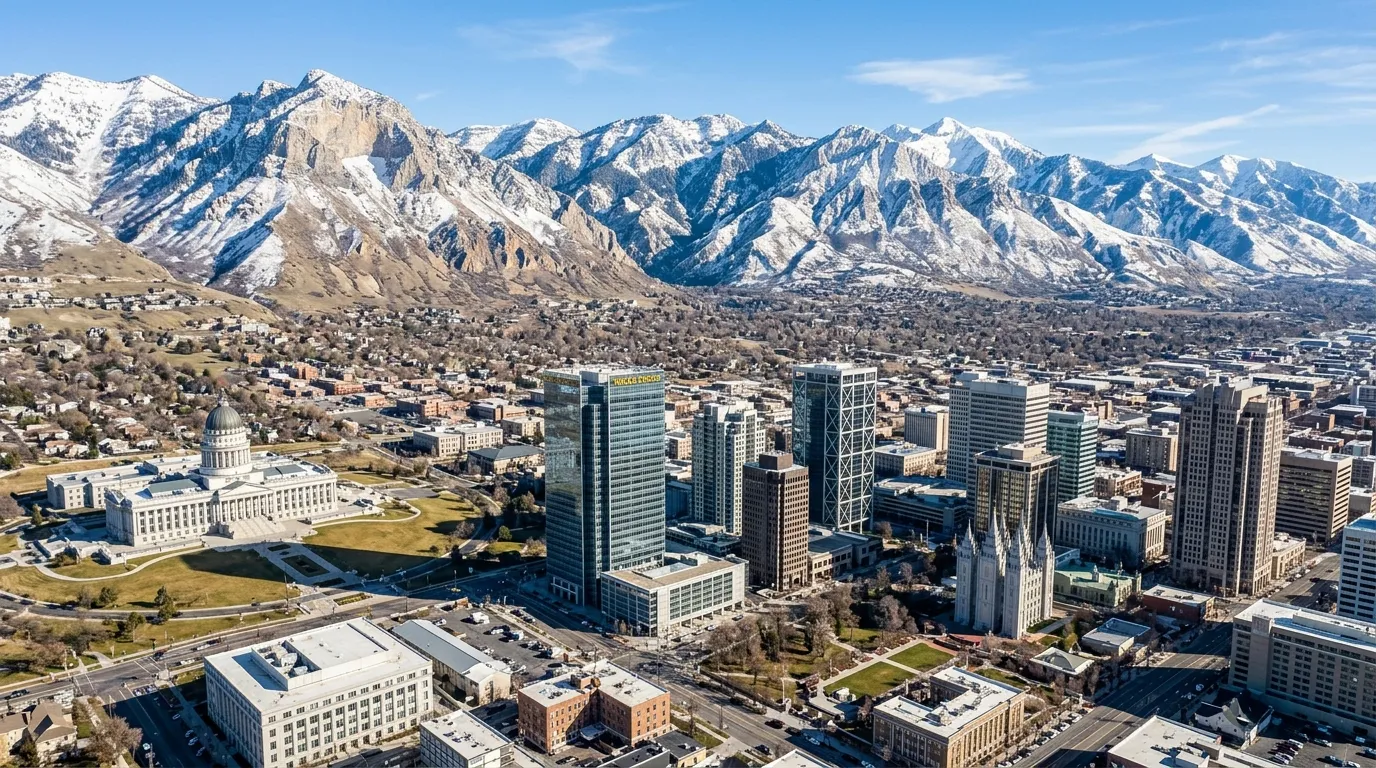
Salt Lake City covers 110 square miles that include almost every terrain type on the Wasatch Front. The valley floor stretches flat and clay-heavy from the Jordan River to the foothills. The benches climb into rocky, well-drained alluvium. The downtown core has been graded, filled, and regraded so many times over 170 years that what’s below the surface is anyone’s guess until you dig. AccuRite Excavation works across this entire range, and our approach changes with every neighborhood because the ground demands it.
The Avenues and Capitol Hill: Historic Terrain
The Avenues is one of the oldest residential neighborhoods in Utah, with homes climbing the steep hillside north of downtown from A Street up to U Street. The lots are narrow, the streets are steep, and many foundations date to the late 1800s. Excavation here is precision work.
The soil in the upper Avenues transitions from clay to rocky alluvium with altitude. Lower Avenues lots near South Temple have deeper clay. By the time you reach the upper lettered streets, you’re digging through rock-laden hillside deposits that require hydraulic hammering.
Access is the persistent challenge. The Avenues’ narrow streets and tight lot lines mean equipment staging is limited. We frequently use compact excavators that can work between buildings and navigate the grades that full-size machines can’t handle. Spoil removal has to be planned because there’s nowhere to stockpile material on a 40-foot-wide lot.
Capitol Hill presents similar challenges — steep terrain, older homes, and tight access. The soil is a mix of lake terrace clay and rocky fill, and every lot seems to have something unexpected buried in it from the neighborhood’s long history of development.
For foundation repair, addition excavation, and utility replacement in these historic neighborhoods, careful technique matters more than horsepower.
East Bench: Rock and Views
The East Bench neighborhoods — from the University of Utah area south through Millcreek and into Holladay — sit on the Bonneville terrace and the alluvial fans above it. This is premium residential territory with larger lots, mountain views, and rocky soil.
Excavation on the East Bench means dealing with quartzite cobble, sandstone fragments, and occasional solid ledge. Foundation digs take longer and cost more than valley floor work. Retaining walls are common on sloped lots, and the cut-and-fill work required to create level building pads on hillside sites adds complexity.
The drainage is better up here than on the valley floor — the gravelly soil lets water through instead of holding it. But hillside runoff during storms and snowmelt has to be managed to avoid erosion and downstream flooding. We include drainage systems in every East Bench excavation project.
Sugar House: The Middle Ground
Sugar House sits on an ancient lake terrace that gives it soil conditions different from both the valley floor and the East Bench. The ground is a variable mix of gravel, sand, and clay depending on the specific block. Some Sugar House lots dig easily through well-drained gravelly soil. Others, particularly in the lower areas near Sugarhouse Park, hit clay with water.
Sugar House has seen intense redevelopment, with older single-family homes and small commercial buildings giving way to mixed-use development, townhomes, and apartment buildings. This creates steady excavation demand for demolition, site clearing, and new residential foundation work.
The neighborhood’s 2100 South and 1100 East corridors carry heavy traffic, and excavation projects along these streets require traffic management plans and coordination with UDOT or SLC transportation. We plan staging and access to minimize traffic impact.
West Side: Rose Park, Glendale, Poplar Grove
The west side of Salt Lake City — from the Jordan River west to the airport — is flat Bonneville clay. Rose Park, Glendale, and Poplar Grove are established residential neighborhoods with homes from the 1940s through the 1970s, many of which are reaching the age where foundations need attention and utilities need replacement.
The clay here is heavy and moisture-reactive, similar to what we work in Davis County’s west-side communities. The water table is moderate but rises near the Jordan River and the North Temple corridor. Foundation excavation is straightforward digging in terms of material but requires proper clay management — compaction, drainage, and moisture control.
These neighborhoods are also seeing new investment, with infill construction and renovation projects replacing aging housing stock. We handle residential excavation for both new construction and foundation repair on the west side. Proper grading and drainage work is essential on these clay-heavy lots to protect foundations from moisture damage.
Downtown Core
Downtown SLC has been built, demolished, and rebuilt repeatedly for over 150 years. The soil below downtown streets and buildings is a patchwork of native Bonneville lake sediment, imported fill, demolished building remnants, and abandoned utility corridors. Excavation downtown is always an investigation — you plan for what you think is there and adapt when you find something else.
Commercial demolition and site prep in the downtown core involves navigating adjacent buildings, active utility corridors, transit infrastructure (TRAX lines, bus routes), and the city’s right-of-way requirements. These are complex commercial projects that require detailed planning and experienced crews.
SLC’s Permit Landscape
Salt Lake City has one of the more complex permit environments on the Wasatch Front. Building Services handles standard excavation permits, but overlay zones add layers:
- Historic districts (Avenues, Capitol Hill, parts of Sugar House) may require Historic Landmarks Commission review
- Flood zones near the Jordan River require FEMA compliance
- Right-of-way permits are needed for any work extending into the public right-of-way
- Demo permits for commercial demolition are separate from building permits
We navigate all of these and include permit management in every SLC project scope. The goal is to keep the permitting from delaying the work.
Serving All of Salt Lake City
AccuRite works across Salt Lake City’s neighborhoods, from the Jordan River to the mountain front. We also serve the surrounding Salt Lake County communities including Sandy, Murray, Holladay, and Cottonwood Heights.
Whether you need hauling and material delivery, septic systems for rural parcels, or government project excavation, call (801) 814-6975 for a free estimate on your Salt Lake City project. Tell us the neighborhood and we’ll come prepared for what’s in the ground there.
Soil Conditions in Salt Lake City
Salt Lake City's soil varies dramatically across its geography. The valley floor west of I-15 — Rose Park, Glendale, Poplar Grove — sits on deep Lake Bonneville clay with a moderate to shallow water table. The East Bench above 1300 East transitions to rocky alluvium and glacial deposits with quartzite fragments. Capitol Hill and the Avenues have a mix of clay and rocky fill depending on the block. Sugar House sits on a terrace with well-drained gravel and sand in some areas and heavier clay in others. Downtown fills and regrading over 150 years of development have created a patchwork of native and imported soils.
Permits & Regulations
Salt Lake City processes excavation permits through its Building Services division. The city has multiple overlay zones that affect excavation, including historic preservation districts in the Avenues, Capitol Hill, and parts of Sugar House. Projects in flood zones near the Jordan River require additional review. Commercial demolition in the downtown core requires separate demo permits and utility coordination. SLC also has a right-of-way permit process for any excavation that extends into the public right-of-way, including utility connections from private property to city mains.
Excavation Services in Salt Lake City
Residential Excavation
Foundation digs, basement excavation, grading, and site preparation for homes across the Wasatch Front.
Learn moreCommercial Projects
Large-scale commercial excavation including building pads, parking lots, subdivisions, and multi-family developments.
Learn moreGovernment Projects
Government and military excavation contracts with security clearance, bonding, and full compliance.
Learn moreRock Walls & Retaining Walls
Engineered boulder retaining walls and decorative rock walls for residential and commercial properties along the Wasatch bench.
Learn moreUnderground Utilities
Water lines, sewer lines, storm drain, gas, and utility trenching for residential and commercial projects.
Learn moreGrading & Land Clearing
Land grading, lot clearing, and site preparation for residential and commercial construction projects.
Learn moreLand Clearing
Lot clearing, tree and brush removal, stump removal, and site clearing across Weber and Davis counties.
Learn moreDemolition
Residential and commercial structure demolition, concrete removal, and debris hauling.
Learn moreSeptic Systems
Septic tank installation, repair, replacement, and perc testing for rural properties in Northern Utah.
Learn moreHauling & Delivery
Material delivery (gravel, topsoil, fill dirt, sand) and debris removal/hauling services.
Learn moreWater Features & Ponds
Custom pond construction, waterfalls, water gardens, and decorative water feature excavation.
Learn moreExcavation FAQs for Salt Lake City
Can you excavate in SLC's historic districts?
What does excavation cost in Salt Lake City?
Does AccuRite handle downtown SLC demolition?
How do SLC's different neighborhoods affect excavation?
Also Serving Nearby Cities
Start Your Salt Lake City Project Today
Call Shawn directly or request a free estimate for your Salt Lake City excavation project.