
Excavation Services in Herriman, UT
AccuRite Excavation provides excavation, grading, and site prep in Herriman, Utah — one of Utah's fastest-growing cities. New construction specialists with knowledge of Herriman's unique terrain. Call (801) 814-6975.
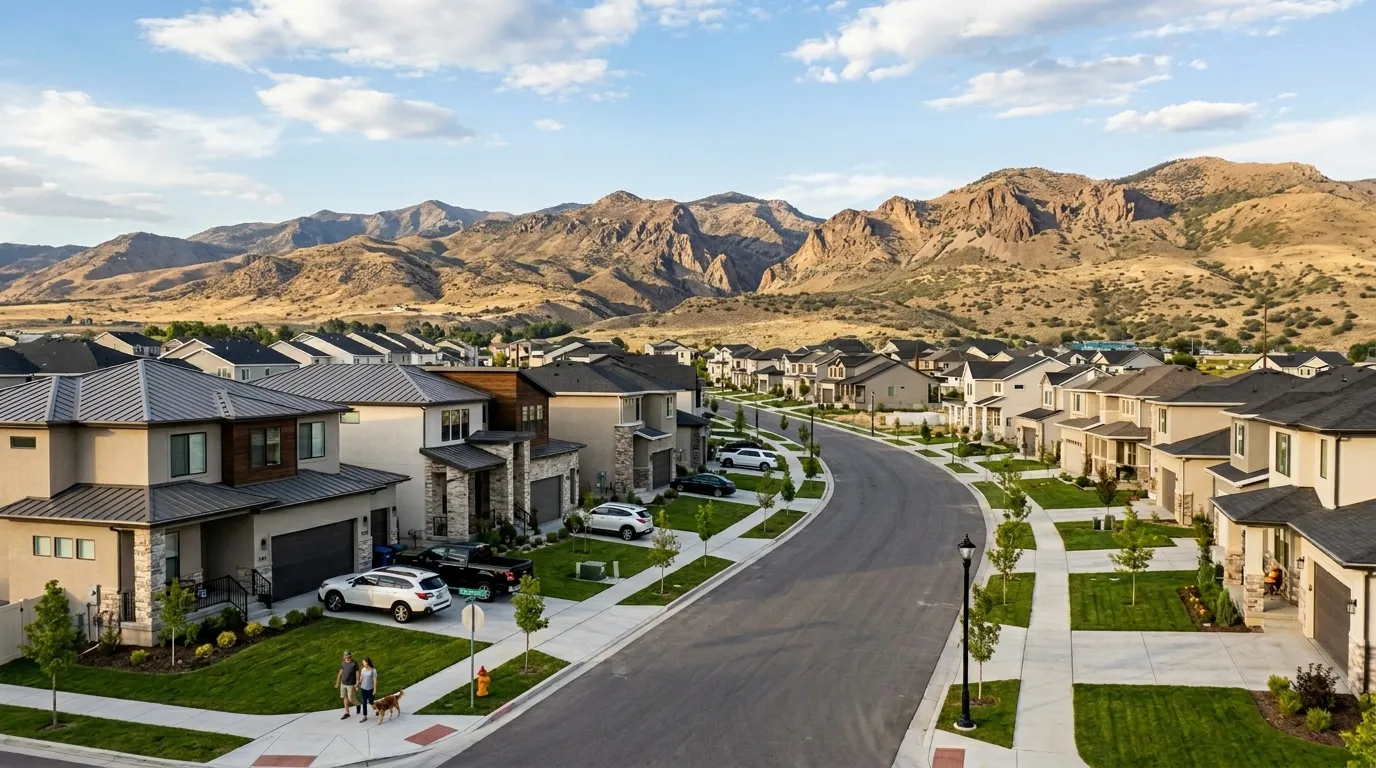
Herriman is what happens when a mountain-ringed community becomes the most in-demand growth market in the state. Building sites that would have been considered too difficult to develop 20 years ago are now sprouting homes, schools, and commercial centers. The terrain hasn’t gotten easier — the hillsides are still steep, the soil is still rocky and laced with caliche, and the logistics of building on an active construction frontier are still complicated. But the demand for housing in this location has pushed development into ground that requires serious excavation expertise. AccuRite Excavation has the machines and the knowledge for it.
Building on the Growth Frontier
Much of Herriman’s active development is happening on land that wasn’t part of anybody’s building plan a generation ago. The hillsides west of Mountain View Corridor, the slopes approaching the Oquirrh range, and the Traverse Mountain area to the south are being graded into buildable lots at a pace that makes Herriman consistently one of Utah’s fastest-growing cities.
These aren’t valley floor lots. The terrain has grade, the soil has rock, and the infrastructure is being built simultaneously with the homes. New subdivision streets may still be unpaved when the first homes are under construction. Utility mains may be going in on one block while foundation excavation is happening on the next.
Working in this environment requires flexibility and coordination. We sequence our equipment and scheduling around the active development timeline, knowing that site conditions change as the subdivision progresses.
Caliche: Herriman’s Signature Challenge
If there’s one soil feature that defines Herriman excavation, it’s caliche. This naturally cemented calcium carbonate layer is widespread across the city at depths ranging from one to six feet below the surface. It forms in the semi-arid climate as mineral-laden groundwater evaporates, leaving a concrete-like deposit that can be inches to feet thick.
Standard excavation equipment struggles with caliche. A bucket that moves through clay or loose gravel will bounce off a caliche layer. We use ripping teeth and hydraulic hammers to break through it, then haul away the material and replace it with drainable fill where necessary.
Caliche’s impermeability is the other problem. Water won’t pass through it, so any drainage system that relies on water moving downward through the soil profile will fail if caliche sits in the way. Around foundations, we break through the caliche and install gravel drains that route water past the impermeable layer and away from the structure.
Hillside Development
A significant portion of Herriman’s buildable land is on slopes. The hillside lots along Juniper Crest, the Mountain Ridge area, and the developments climbing toward the Oquirrh and Traverse ranges require the full suite of hillside excavation work:
- Cut-and-fill earthwork — shaping level building pads from sloped terrain, sometimes moving thousands of cubic yards of material per lot
- Retaining walls — holding grade changes that can exceed ten feet on steep lots
- Driveway construction — cutting access from the road to building pads that may sit significantly above or below road grade
- Drainage systems — intercepting and routing hillside runoff around structures
- Erosion control — managing exposed slopes during and after construction to prevent sediment from affecting neighboring properties and stormwater systems
Underground utility work is also part of the hillside scope, with water, sewer, and gas lines trenched through rocky terrain at proper depth.
We’ve done this work throughout Herriman’s hillside developments. Each lot has its own character — the rock depth varies, the slope angle changes, and the caliche appears in unpredictable patterns. Site-specific evaluation before pricing is essential, and we do it on every Herriman project.
Traverse Mountain Area
Herriman’s southern boundary approaches the Traverse Mountains, the same range that creates the Point of the Mountain between Salt Lake and Utah Counties. The geology here differs from the Oquirrh side — volcanic tuff, conglomerate, and sedimentary layers that vary in hardness and stability, similar to what we encounter in Draper.
Building on Traverse Mountain terrain requires geotechnical evaluation to understand the specific rock types and their behavior. Some layers crumble when exposed to weather, affecting slope stability. Others are hard enough to require sustained hammering. The geotech report guides our excavation approach on these properties.
Valley Floor Development
Not all of Herriman is hillside. The lower central areas of the city and the developments along Herriman Main Street corridor sit on more manageable terrain — alluvial deposits with clay, some caliche, but generally flatter and more accessible than the hillside lots.
Residential excavation in these areas follows a more standard sequence: lot grading, foundation dig, utility trenching, and final grade. The caliche may still be present, but the absence of significant slope reduces the overall complexity and cost.
Commercial Growth
Herriman’s population growth has driven commercial development to serve the expanding community. Retail centers, office buildings, medical facilities, and schools have followed the rooftops. We handle commercial site preparation for these developments, including mass grading, foundation excavation, utility installation, and parking lot subgrade preparation.
The soil challenges are the same as residential — caliche, rock, and variable alluvial deposits — but at a larger scale. Commercial pads require engineered compaction to strict specifications, and we verify our work meets the project engineer’s requirements.
Serving Herriman and the Southwest Valley
Herriman borders Riverton to the north, South Jordan to the northeast, and Draper to the east across the Traverse Mountains. We work throughout the southwest valley growth corridor. Call (801) 814-6975 for a free estimate on your Herriman project — and be ready for us to ask about caliche, because in Herriman, it’s always part of the conversation.
Soil Conditions in Herriman
Herriman's soil reflects its position between two mountain ranges. The valley portions of the city have a mix of Bonneville clay and alluvial deposits. The hillside areas, which make up a significant portion of the city, sit on Oquirrh Mountain and Traverse Range alluvial fan deposits — gravel, sand, rocky debris, and decomposed rock. Caliche layers are common across much of Herriman, sometimes thick enough to require sustained hammering to penetrate. The Traverse Mountain properties on the south side have the volcanic tuff and sedimentary rock found along the Point of the Mountain. Soil conditions vary significantly from lot to lot, making site-specific evaluation essential.
Permits & Regulations
Herriman City handles building and excavation permits through its Building Department. The city has been one of the most active permit-issuing jurisdictions in Salt Lake County due to the volume of new construction. Hillside development standards apply to properties in the foothill zones. Grading permits, stormwater management plans, and retaining wall engineering are required for most new development. We manage permits and coordinate with the city's plan review process on every project.
Excavation Services in Herriman
Residential Excavation
Foundation digs, basement excavation, grading, and site preparation for homes across the Wasatch Front.
Learn moreCommercial Projects
Large-scale commercial excavation including building pads, parking lots, subdivisions, and multi-family developments.
Learn moreGovernment Projects
Government and military excavation contracts with security clearance, bonding, and full compliance.
Learn moreRock Walls & Retaining Walls
Engineered boulder retaining walls and decorative rock walls for residential and commercial properties along the Wasatch bench.
Learn moreUnderground Utilities
Water lines, sewer lines, storm drain, gas, and utility trenching for residential and commercial projects.
Learn moreGrading & Land Clearing
Land grading, lot clearing, and site preparation for residential and commercial construction projects.
Learn moreLand Clearing
Lot clearing, tree and brush removal, stump removal, and site clearing across Weber and Davis counties.
Learn moreDemolition
Residential and commercial structure demolition, concrete removal, and debris hauling.
Learn moreSeptic Systems
Septic tank installation, repair, replacement, and perc testing for rural properties in Northern Utah.
Learn moreHauling & Delivery
Material delivery (gravel, topsoil, fill dirt, sand) and debris removal/hauling services.
Learn moreWater Features & Ponds
Custom pond construction, waterfalls, water gardens, and decorative water feature excavation.
Learn moreExcavation FAQs for Herriman
Why is Herriman excavation more expensive than valley floor cities?
What is caliche and why does it matter in Herriman?
How long does excavation take for a new home in Herriman?
Does Herriman have enough water and sewer infrastructure for all the new homes?
Also Serving Nearby Cities
Start Your Herriman Project Today
Call Shawn directly or request a free estimate for your Herriman excavation project.