
Excavation Services in Sandy, UT
AccuRite Excavation provides excavation, grading, and retaining walls in Sandy, Utah. Experienced with foothills terrain near Little Cottonwood Canyon and the Sandy Civic Center corridor. Call (801) 814-6975.
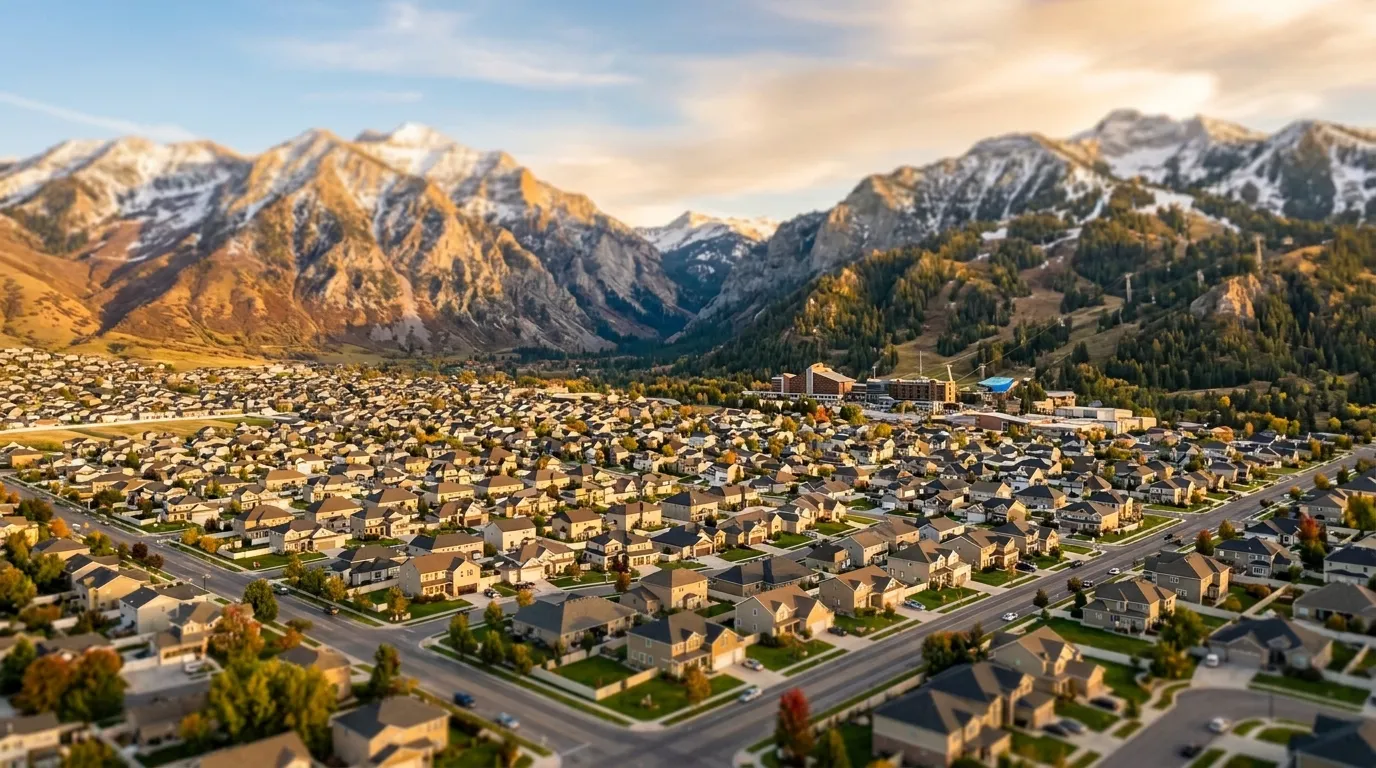
Sandy is a city of contrasts when it comes to excavation. The western half, anchored by the Sandy Civic Center area and the I-15 commercial corridor, offers flat terrain and relatively straightforward clay-soil digging. The eastern half, climbing toward the mouths of Big Cottonwood and Little Cottonwood Canyons, presents some of the most challenging residential excavation terrain in the entire Salt Lake Valley. AccuRite Excavation has experience across the full range.
Glacial Moraine: Sandy’s East Side Story
The Cottonwood Canyons were carved by glaciers during the last ice age, and those glaciers deposited enormous quantities of rocky material at their mouths as they retreated. Sandy’s eastern neighborhoods — Granite, the areas east of 1300 East approaching the canyon mouths, and the streets climbing toward Snowbird and Alta — sit directly on this glacial moraine.
This isn’t ordinary rocky soil. Moraine deposits contain everything from fine sand to granite boulders the size of pickup trucks. There’s no predicting exactly where the boulders are until you’re digging. A foundation trench might go smoothly for twenty feet and then hit a six-ton boulder that has to be broken or hauled out.
We approach east Sandy projects knowing that rock hammering is likely and boulder removal is possible. Our equipment includes hydraulic hammers for breaking rock and machines with enough lift capacity to handle oversized material. Hauling and material removal is a significant part of every east-side dig. Timelines for foundation digs on the east side account for the reality that some days you move less material than planned because the ground had something to say about it.
The Drainage Advantage
There’s an upside to the glacial deposits. This rocky, sandy material drains extremely well. Properties on Sandy’s east side rarely have the water table and drainage problems that plague the valley floor. Foundations stay dry, basements don’t leak, and the soil doesn’t expand and contract with moisture the way Bonneville clay does. The material is harder to dig but better to build on.
Sandy Civic Center and the Valley Floor
The Sandy Civic Center area, the TRAX line corridor, and the neighborhoods west of 700 East sit on the Salt Lake Valley floor. The soil here is Bonneville clay and silt — the same material that underlies the entire valley west of the benches.
Excavation on the valley floor is straightforward in terms of material. The clay moves without hammering and the terrain is flat. The challenges are the clay’s moisture reactivity and, in low-lying western Sandy areas approaching the Jordan River, a moderate water table.
Commercial development along the State Street corridor and the TRAX-adjacent areas generates steady demand for commercial site prep, foundation work, and demolition of older commercial structures being redeveloped. We handle commercial excavation at the scale these corridor projects require.
The 9400 South Corridor
The 9400 South corridor is one of Sandy’s primary commercial arteries, and the transition from flat ground on the west to hilly terrain on the east happens along this stretch. Properties at the 9400 South and Highland Drive intersection face different soil conditions than properties at 9400 South and State Street, even though they’re on the same road. We’ve worked both ends and adjust our approach accordingly.
Retaining Walls on the East Side
Sandy’s east side is wall country. The steep lots approaching the Cottonwood Canyons need retaining walls for building pads, driveways, yard terracing, and slope stabilization. We build walls as an integrated part of the excavation project because the wall needs to go in while the equipment is on-site and the grades are exposed.
Natural rock walls are popular in this area — the granite and quartzite sourced from local quarries complement the canyon setting. For taller structural walls, engineered segmental block with geogrid reinforcement handles the loads. We’ve built walls up to twelve feet in Sandy’s foothills, often in tiered configurations that manage grade changes of fifteen feet or more across a property.
Residential Excavation Across Sandy
Whether it’s a new custom home on an east-side canyon lot or an addition to an existing home in the Crescent View area, residential excavation is our core Sandy service. The specifics change with the terrain:
- East side canyon lots: Rock hammering, boulder removal, extensive retaining walls, hillside drainage
- Central Sandy neighborhoods: Mixed soil, some rock on the upper streets, moderate grading needs
- West side and valley floor: Clay management, compaction, drainage-focused grading
We price each project based on its actual location and soil conditions, not a city-wide average. Sandy’s varied terrain also makes it a strong market for grading and drainage work, particularly on transitional lots between the valley floor and the bench.
Utility Work and Infrastructure
Sandy’s established neighborhoods have aging utility infrastructure that needs periodic replacement. Original sewer laterals, water service lines, and storm drains wear out, and we handle the underground utility excavation for their replacement. In the east-side rocky terrain, utility trenching is significantly more work than on the valley floor — bedding material is essential because the native boulder-strewn ground doesn’t support pipes well.
Serving Sandy and South Salt Lake Valley
Sandy borders Draper to the south, Cottonwood Heights to the north, and Midvale and Murray to the northwest. We work throughout the south Salt Lake Valley. From our Ogden base, Sandy is about a 45-minute drive south on I-15, and we stage equipment locally for multi-day projects.
Call (801) 814-6975 for a free estimate. We’ll visit your property, assess the specific terrain and soil, and give you a quote that reflects what your ground actually demands.
Soil Conditions in Sandy
Western Sandy sits on the standard Bonneville clay and silt valley floor. Eastern Sandy, particularly the neighborhoods climbing toward the Cottonwood Canyons, transitions to glacial moraine and alluvial fan deposits — a rocky mix of granite boulders, quartzite cobble, and coarse sand deposited by the ancient glaciers that carved Little and Big Cottonwood Canyons. These deposits create some of the most demanding excavation conditions in Salt Lake County. The water table is deep on the east side but can be a factor in low-lying western areas near the Jordan River.
Permits & Regulations
Sandy City processes building and grading permits through its Community Development Department. Hillside zone properties on the east side require geotechnical reports and grading plans before excavation permits are issued. The city has specific stormwater management requirements for new development. Projects near the mouths of Little Cottonwood or Big Cottonwood Canyons may have additional watershed protection considerations. We handle permit applications and coordinate required reports as part of every project.
Excavation Services in Sandy
Residential Excavation
Foundation digs, basement excavation, grading, and site preparation for homes across the Wasatch Front.
Learn moreCommercial Projects
Large-scale commercial excavation including building pads, parking lots, subdivisions, and multi-family developments.
Learn moreGovernment Projects
Government and military excavation contracts with security clearance, bonding, and full compliance.
Learn moreRock Walls & Retaining Walls
Engineered boulder retaining walls and decorative rock walls for residential and commercial properties along the Wasatch bench.
Learn moreUnderground Utilities
Water lines, sewer lines, storm drain, gas, and utility trenching for residential and commercial projects.
Learn moreGrading & Land Clearing
Land grading, lot clearing, and site preparation for residential and commercial construction projects.
Learn moreLand Clearing
Lot clearing, tree and brush removal, stump removal, and site clearing across Weber and Davis counties.
Learn moreDemolition
Residential and commercial structure demolition, concrete removal, and debris hauling.
Learn moreSeptic Systems
Septic tank installation, repair, replacement, and perc testing for rural properties in Northern Utah.
Learn moreHauling & Delivery
Material delivery (gravel, topsoil, fill dirt, sand) and debris removal/hauling services.
Learn moreWater Features & Ponds
Custom pond construction, waterfalls, water gardens, and decorative water feature excavation.
Learn moreExcavation FAQs for Sandy
What makes excavation different on Sandy's east side?
How much does hillside excavation cost near the canyons?
Do I need a retaining wall on my Sandy property?
Also Serving Nearby Cities
Start Your Sandy Project Today
Call Shawn directly or request a free estimate for your Sandy excavation project.