
Excavation Services in Riverton, UT
AccuRite Excavation provides excavation, grading, and utility work in Riverton, Utah. Serving the southwest growth corridor with residential site prep, retaining walls, and infrastructure development. Call (801) 814-6975.
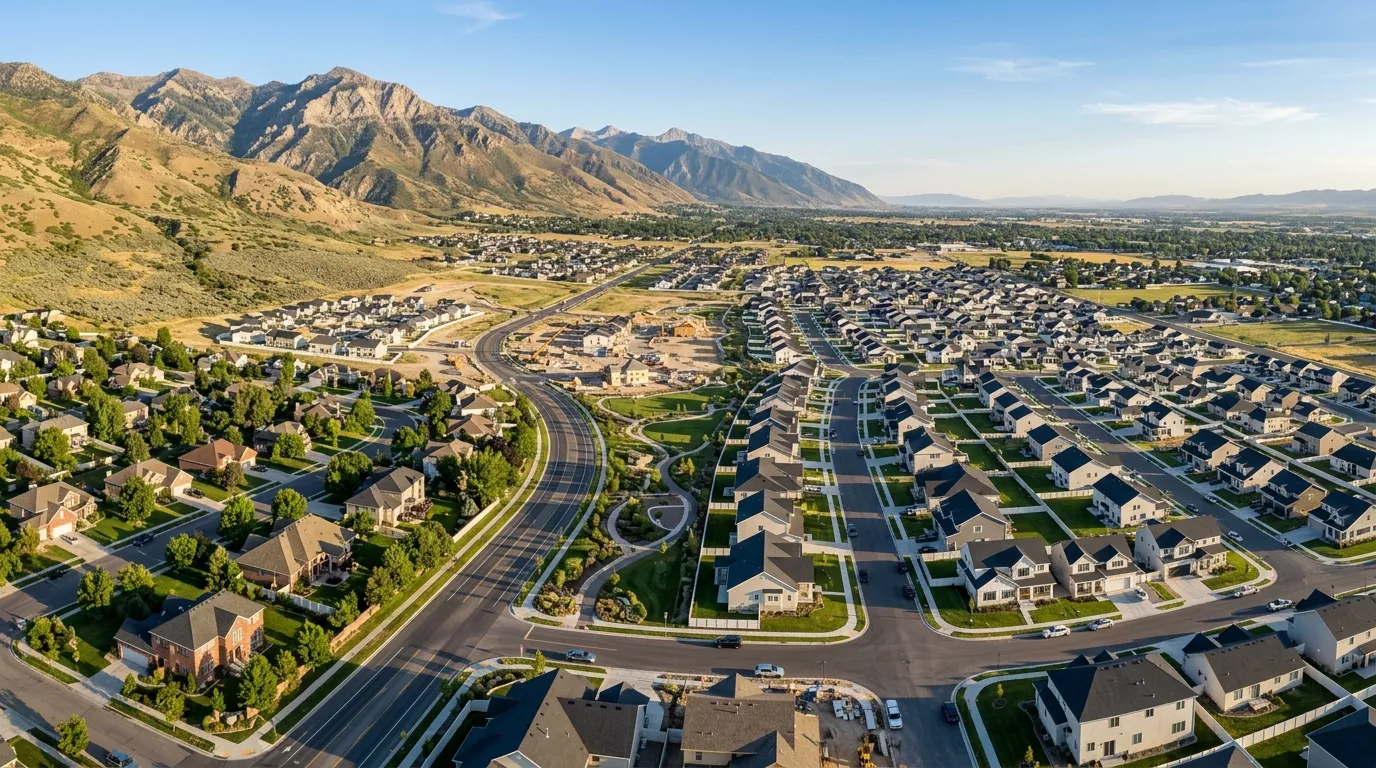
Riverton has grown from a small farming community into a city of over 45,000, and most of that growth happened in the last 20 years. The old center of town along 12600 South retains some of the original character, but the rest of Riverton is new subdivisions, new commercial centers, and new infrastructure built on ground that was growing alfalfa not long ago. AccuRite Excavation has been part of this growth, handling the site preparation that turns raw land into buildable lots.
The Western Growth Frontier
Riverton’s growth has pushed steadily westward toward the Oquirrh Mountains. Subdivisions along Mountain View Corridor, the neighborhoods between 4000 West and 5600 West, and the developments approaching Herriman have consumed thousands of acres of former agricultural and open land.
The soil on this western side is Oquirrh alluvial fan material — coarser than the valley floor clay, better-drained, and generally more favorable for building. The gravel and sand component provides good bearing capacity, and the natural drainage reduces the moisture-related foundation problems that plague clay-soil communities.
But the alluvial material isn’t uniformly cooperative. Caliche layers — calcium carbonate cemented hardpan — appear at varying depths across western Riverton. When we hit caliche, it has to be ripped or hammered because a standard excavator bucket won’t cut it. Where caliche sits at foundation depth, we break it out and replace it with drainable material so water doesn’t perch against the foundation.
New Construction Sequence
For new homes in Riverton’s growth areas, we handle the full excavation scope:
- Lot grading — establishing the building pad elevation and surface grades
- Foundation excavation — digging for footings and basement walls
- Utility trenching — water, sewer, storm drain, gas, and electrical connections to the street mains
- Final grading — post-construction grading for drainage and landscaping
The alluvial soils compact differently than clay. They need specific moisture content and compaction energy to achieve the density specifications. We test and verify compaction on every new construction project.
The Original Town Center
Riverton’s older core along 12600 South and Redwood Road has homes from the 1980s and 1990s that are beginning to need the maintenance excavation that older neighborhoods require. Foundation repair, utility replacement, and drainage improvements are increasingly common.
The soil in eastern Riverton is closer to standard valley floor clay — not as heavy as Murray or Taylorsville, but still moisture-reactive and less favorable than the western alluvial material. Homes built during the 1980s building boom may not have had the soil preparation that current building standards require.
Oquirrh Mountain Views and Foothill Lots
The western edge of Riverton offers properties with direct Oquirrh Mountain views and the privacy of the urban-wildland interface. These lots may have steeper terrain, rockier soil, and the need for retaining walls and more extensive site preparation than the flat subdivision lots in central Riverton.
Foothill lot excavation in western Riverton involves cut-and-fill grading, driveway construction on grade, and drainage management for hillside runoff. The alluvial material handles these challenges better than clay — it compacts well for fill slopes and drains runoff without the erosion problems that clay creates.
Mountain View Corridor
The Mountain View Corridor (SR-85) through Riverton has been a catalyst for development. Improved access has driven both residential and commercial growth along the corridor, and the properties within a few miles of the highway have seen some of the most active development in the city.
We handle commercial site preparation along the Mountain View Corridor, including pad grading, foundation excavation, parking lot subgrade, and utility installation for commercial development.
Subdivision-Scale Work
Riverton’s growth has included large subdivision developments that require mass grading, utility main installation, and stormwater infrastructure construction before individual lots are built. We work with developers on these larger projects, providing the earthwork and utility excavation that turns raw land into a subdivision.
Mass grading on Riverton’s alluvial soils requires attention to compaction specifications and moisture control. The coarse material compacts well when managed properly but can settle if placed too dry or without adequate energy. We follow the project engineer’s specifications and verify compaction through testing.
Serving Riverton and the Southwest Valley
Riverton borders Herriman to the west, South Jordan to the north, and Draper to the east. We work throughout the southwest Salt Lake Valley. Call (801) 814-6975 for a free estimate on your Riverton project.
Soil Conditions in Riverton
Riverton's eastern side near the original town center sits on Bonneville clay and alluvial deposits from the Jordan River system. Moving west, the soil transitions to Oquirrh Mountain alluvial fan material — coarser gravel, sand, and rocky debris washed down from the mountains. Caliche layers appear in some western areas, creating hardpan zones that resist excavation and block drainage. The far western properties approaching the mountain front may encounter rock at depth. The water table is generally deep in Riverton, deeper than the valley floor communities near the Jordan River.
Permits & Regulations
Riverton City processes building and excavation permits through its Building Department. Standard permits are required for foundation work, retaining walls, utility trenching, and grading. The city has stormwater management requirements for new development. Western properties on steeper terrain near the Oquirrh foothills may have additional grading standards. We coordinate permits and inspections for every Riverton project.
Excavation Services in Riverton
Residential Excavation
Foundation digs, basement excavation, grading, and site preparation for homes across the Wasatch Front.
Learn moreCommercial Projects
Large-scale commercial excavation including building pads, parking lots, subdivisions, and multi-family developments.
Learn moreGovernment Projects
Government and military excavation contracts with security clearance, bonding, and full compliance.
Learn moreRock Walls & Retaining Walls
Engineered boulder retaining walls and decorative rock walls for residential and commercial properties along the Wasatch bench.
Learn moreUnderground Utilities
Water lines, sewer lines, storm drain, gas, and utility trenching for residential and commercial projects.
Learn moreGrading & Land Clearing
Land grading, lot clearing, and site preparation for residential and commercial construction projects.
Learn moreLand Clearing
Lot clearing, tree and brush removal, stump removal, and site clearing across Weber and Davis counties.
Learn moreDemolition
Residential and commercial structure demolition, concrete removal, and debris hauling.
Learn moreSeptic Systems
Septic tank installation, repair, replacement, and perc testing for rural properties in Northern Utah.
Learn moreHauling & Delivery
Material delivery (gravel, topsoil, fill dirt, sand) and debris removal/hauling services.
Learn moreWater Features & Ponds
Custom pond construction, waterfalls, water gardens, and decorative water feature excavation.
Learn moreExcavation FAQs for Riverton
What soil conditions will I find in western Riverton?
How much does new home excavation cost in Riverton?
Does Riverton have water table issues?
Also Serving Nearby Cities
Start Your Riverton Project Today
Call Shawn directly or request a free estimate for your Riverton excavation project.