
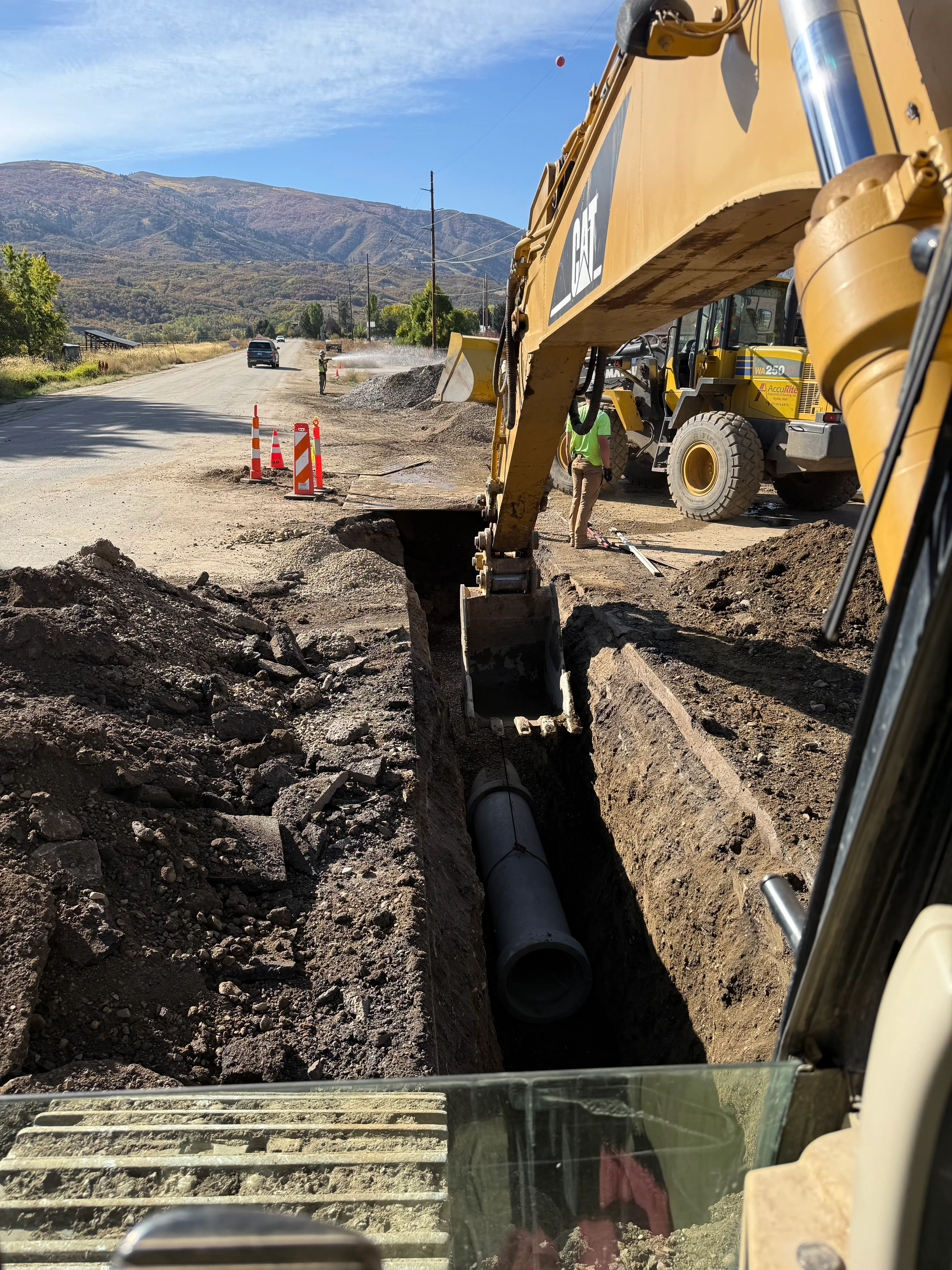
Underground Utility Installation in Ogden & Northern Utah
Water lines, sewer lines, storm drains, gas lines, and utility trenching across Weber and Davis counties. E100 licensed, fully insured.
Get Your Free Estimate
Underground Utility Contractor in Ogden and Northern Utah
Every home and building depends on what’s buried under the yard: water lines coming in, sewer lines going out, storm drains moving surface water away, gas service feeding the furnace and appliances. When those lines need to be installed, repaired, or replaced, the work starts with an excavator and someone who knows what they’re doing underground.
AccuRite Excavating handles underground utility installation across Weber and Davis counties, serving Ogden, Layton, Clearfield, and the surrounding communities. We’re E100 licensed, fully insured, and have been doing utility work in Northern Utah since 1995. We work on residential projects, commercial sites, and subdivisions.
Underground Utility Services
Sewer Line Installation and Replacement
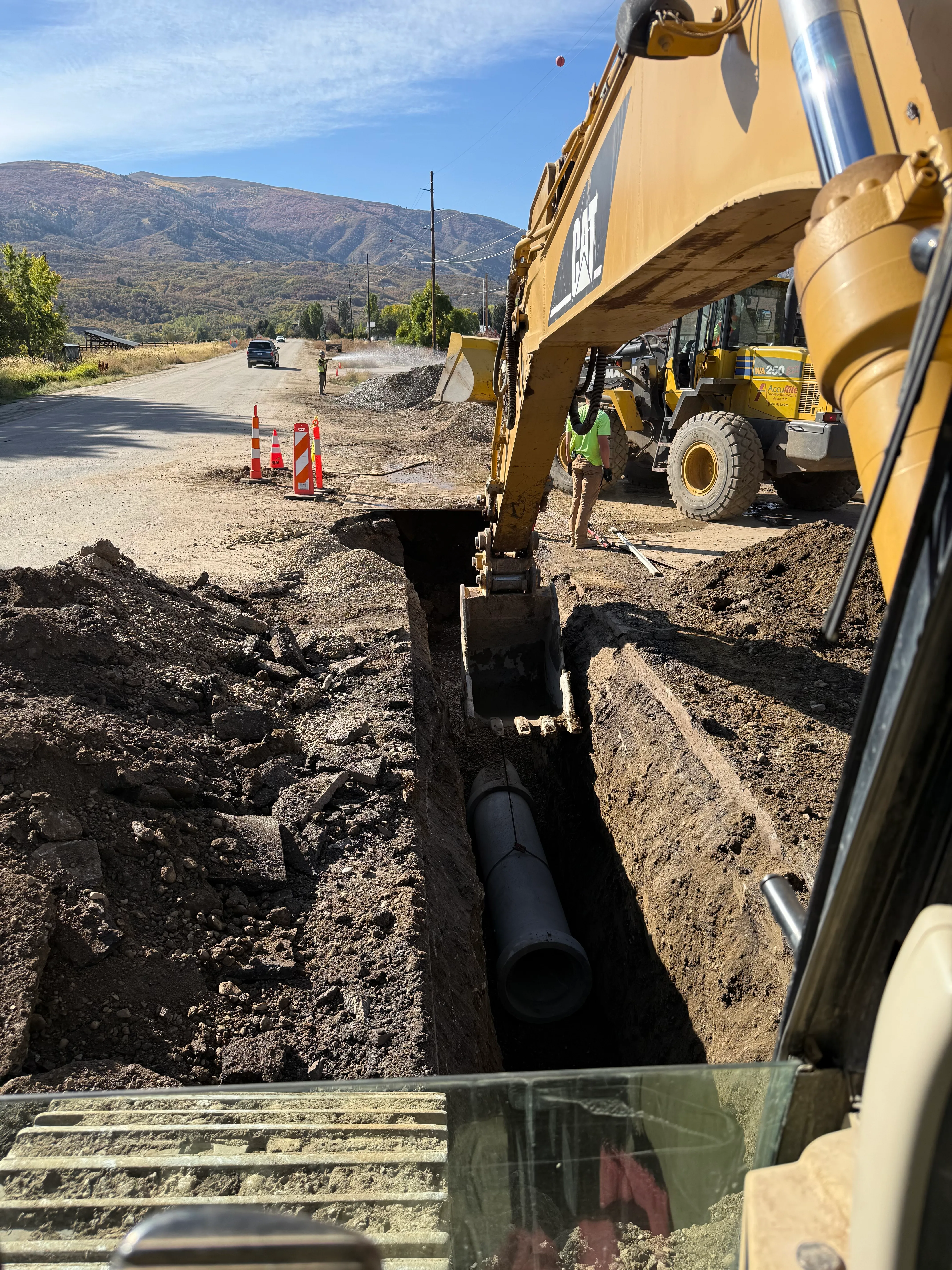
Sewer line work is one of the most common calls we get. Whether it’s a new home connecting to the city sewer for the first time, a sewer lateral replacement on an older property, or a commercial building that needs a new line run to the street, the process is similar: trench, pipe, backfill, compact, restore.
Sewer lines in Weber and Davis counties are typically 4-inch PVC for residential service, running from the house cleanout to the city main at the street. Slope matters: sewer lines need to maintain a consistent fall of 1/4 inch per foot to drain properly. We set that grade carefully during installation.
Old clay tile sewer laterals in Ogden’s older neighborhoods, homes built before the 1970s, are frequently failing and need replacement. Root intrusion and joint separation are the most common failure modes. We excavate and replace with new PVC, then restore the trench with properly compacted backfill.
Water Line Installation and Replacement
Water service lines run from the city main or a private well to the home. In Weber County, water lines need to be buried at least 42-48 inches deep, below the frost line, to prevent freezing. The Ogden area can see ground frost extend 18-24 inches in a hard winter, so the code minimum provides reasonable margin.
We install water service lines in HDPE or copper depending on the application and the municipality’s requirements. For new construction, we coordinate with the local water district on tap fees and connection requirements. For older homes with failing galvanized or lead service lines, we replace from the main to the meter.
Storm Drain Installation
Storm drain work ranges from catching runoff on a residential lot to installing catch basins and pipe networks on commercial sites or subdivisions. Poor drainage causes basement flooding, foundation damage, and erosion. Getting water off a site and away from structures is foundational work.
On residential projects, we install French drains, area drains, and corrugated or PVC pipe runs that carry water to a suitable outlet, typically the street gutter, a drainage easement, or an approved infiltration area. On commercial sites, we install catch basins, grated inlets, and reinforced concrete pipe for larger flows.
Storm drain work often overlaps with grading and land clearing. Surface grading controls where water goes; storm drains handle what the surface grading can’t.
Gas Line Installation
We trench for gas service lines and distribution piping on new construction projects. Gas lines require a minimum 18 inches of cover per code, with yellow polyethylene pipe used for underground distribution. All gas line work is coordinated with Dominion Energy (formerly Questar Gas) for service connection and pressure testing.
We provide the trench and the trench work. Gas fitting and pressure testing is done by licensed gas contractors in coordination with the utility. We coordinate the sequencing so the trench is open and ready when the gas contractor arrives, then backfill once the line passes inspection.
Electrical and Telecom Conduit
Underground electrical conduit, fiber optic, and telecom runs are conduit-and-trench work that follows the same process as other utility installation. We trench to the required depth, install conduit (schedule 40 or schedule 80 PVC depending on the application), backfill, and compact.
Electrical conduit work is done in coordination with the licensed electrician who pulls the wire. For new construction, we often trench conduit for electric, phone, and data in the same trench, which is more efficient than multiple mobilizations.
Blue Stakes: Required Before Any Digging
Before any excavation starts in Utah, existing underground utilities must be marked. That’s what Blue Stakes is for. You call 811, the participating utilities send locators to mark their lines with paint and flags, and you know where it’s safe to dig.
Blue Stakes is required by Utah law. It’s free. The marking is typically completed within 48 hours of the call.
We call Blue Stakes on every project before equipment touches the ground. It’s not optional, and it’s not something we skip to save time. Hitting an unmarked gas line or fiber optic cable causes injuries, service outages, and significant liability. We take this step seriously.
On larger projects, we also do potholing, using vacuum excavation and potholing to expose existing utilities by hand before trenching nearby, to verify that the marked locations are accurate. For complex connections and road crossings, we also utilize live hot tapping and trenchless directional boring so municipal services remain uninterrupted and pavement stays intact.
Utah Frost Line and Burial Depths
The frost line is a real factor in Northern Utah utility installation. Water trapped in soil expands when it freezes, which can lift and damage shallow pipes, fittings, and backfill.
Minimum burial depths in Weber and Davis counties:
- Water service lines: 42-48 inches below grade. Some municipalities require 48 inches minimum.
- Sewer laterals: 36-60 inches depending on slope required and local code. Deeper than frost line isn’t always required for sewer since sewage flows continuously and generates some heat.
- Gas lines: 18 inches minimum cover, though we typically install at 24 inches for margin.
- Electrical conduit: 24 inches minimum for direct burial conductors; 18 inches with conduit.
These aren’t suggestions. Shallow utility installation fails in Utah winters. We install at proper depth regardless of whether it would be faster to go shallow.
Residential vs. Commercial Utility Work
The same fundamentals apply to both residential and commercial utility installation, but scale and complexity differ.
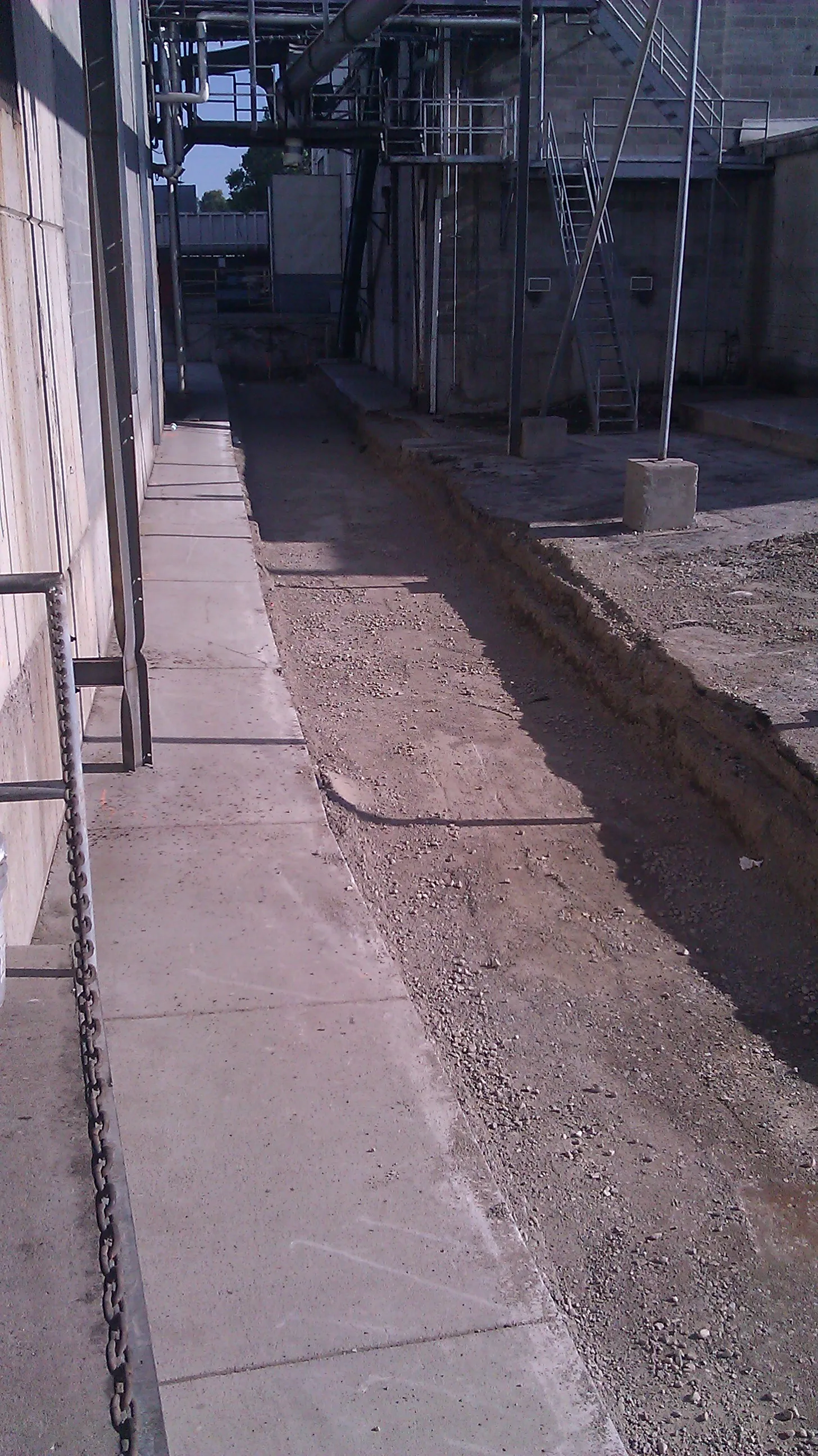
Residential work typically involves a single service connection: one water line, one sewer lateral, one gas connection. The trench runs from the street to the house, usually 50-150 linear feet.
Commercial and subdivision work involves multiple service connections, larger pipe diameters, engineered plans, inspector oversight at multiple stages, and coordination with multiple trades and the local municipality. We’ve done utility work on commercial buildings, apartment complexes, and small subdivisions in Weber County.
For commercial projects, we work from engineered utility plans and coordinate with the general contractor and civil engineer throughout the project. For commercial projects that involve significant site work beyond just utilities, we can often handle multiple phases.
Utility Trenching and Installation Costs
Underground utility costs vary by project because several factors have a major impact on scope:
- Trench depth — water lines buried at 42-48 inches cost more than shallow electrical conduit runs at 18-24 inches
- Linear footage — longer runs from the street to the house or across a commercial site increase material and labor
- Soil conditions — hitting rock during trenching in benchland areas of Ogden dramatically increases time and equipment costs compared to sandy valley-floor soil
- Utility type — sewer laterals, water service lines, storm drains, and gas trenches each have different pipe, fitting, and installation requirements
We provide detailed quotes based on your specific site conditions and project scope. Get a free estimate so we can give you an accurate number.
Coordinating with Other Trades
Underground utility work rarely happens in isolation. New construction involves multiple utility connections happening close together on the same schedule. We work with your plumber, gas contractor, and electrician to sequence the work correctly, avoid conflicts, and keep inspections on track.
If your project also involves residential excavation or a septic system, we can often combine those scopes into a single mobilization. One contractor handling the excavation, utilities, and septic trench work is more efficient than three separate companies working the same site.
Why AccuRite for Underground Utility Work
We’ve been doing utility work in Weber and Davis County for over 30 years. We know the local code requirements, the permit process, and the soil conditions in different parts of the valley. We know which areas are likely to hit rock and which run sandy loam all the way down.
Our E100 license covers this scope of work. We carry general liability and workers’ comp. And we handle Blue Stakes coordination as a standard part of every project, not as an afterthought.
Get a Quote
Call us to discuss your utility project. We serve Ogden, Roy, Clearfield, Layton, South Weber, Farr West, North Ogden, Pleasant View, and throughout Weber and Davis counties.
Utilities FAQs
How much does utility line installation cost in Utah?
How deep are utility lines buried in Utah?
What is Blue Stakes/811 and when do I need it?
How much does trenching cost per foot?
Related Services
Residential Excavation
Foundation digs, basement excavation, grading, and site preparation for homes across the Wasatch Front.
Learn moreCommercial Projects
Large-scale commercial excavation including building pads, parking lots, subdivisions, and multi-family developments.
Learn moreSeptic Systems
Septic tank installation, repair, replacement, and perc testing for rural properties in Northern Utah.
Learn moreAreas We Serve for Utilities
Ready to Start Your Project?
Call us today for a free estimate or fill out our quick form.