
Excavation Services in Farmington, UT
AccuRite Excavation provides excavation, retaining walls, and site prep in Farmington, Utah. Local expertise with the historic district, Station Park area, and foothill properties. Call (801) 814-6975.
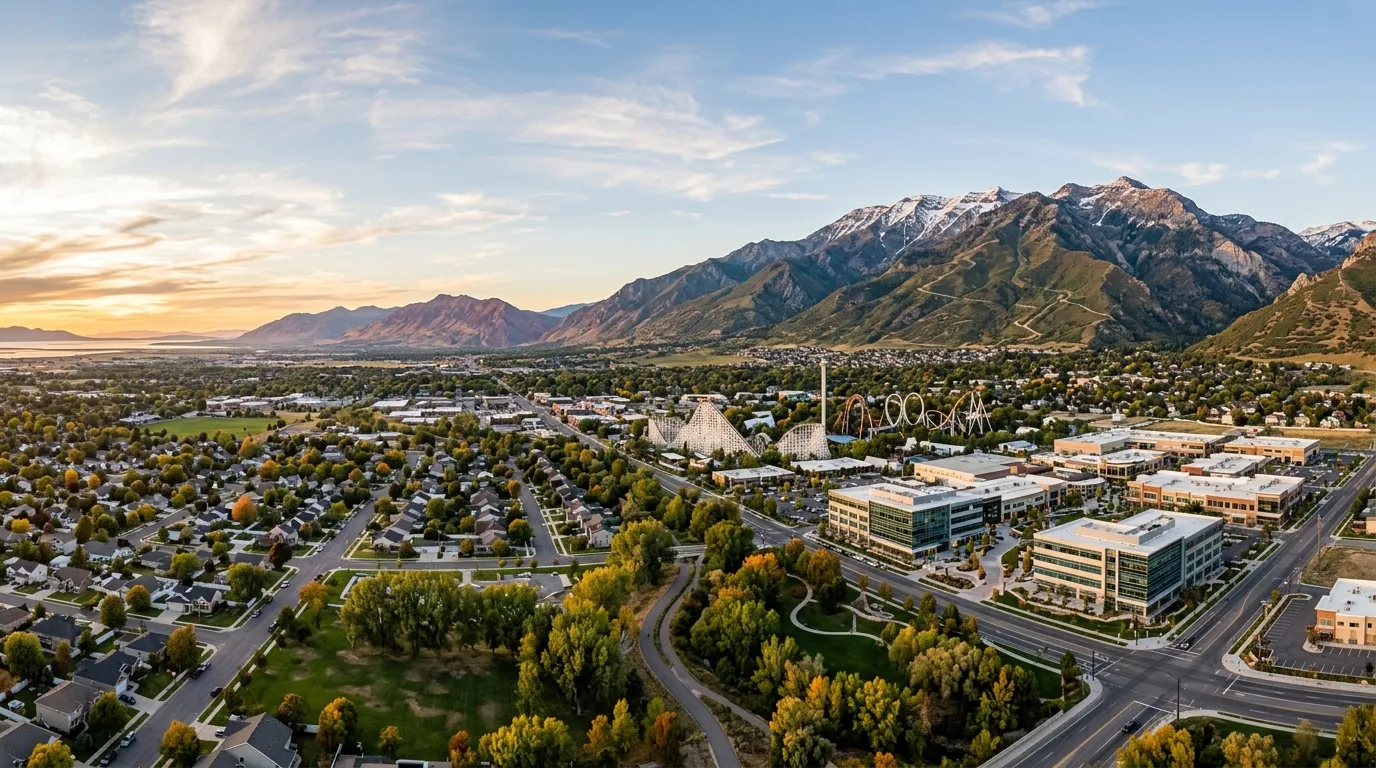
Farmington has layers — historically and geologically. The oldest parts of town along State Street predate statehood, with stone and brick buildings that have watched Davis County grow up around them. A few blocks west, Station Park represents the modern Farmington with its retail, dining, and FrontRunner transit connection. And above it all, the Wasatch foothills offer some of the most coveted residential lots in the county, with views that stretch from the Great Salt Lake to the Oquirrh Mountains. AccuRite Excavation works in all three of Farmington’s worlds.
The Historic Core: Careful Excavation on Old Ground
Farmington’s original settlement centered along State Street and Main Street, and many structures from the 1860s through the early 1900s still stand. When excavation work is needed in this area — foundation repair, utility replacement, addition work — it requires a different approach than new construction on open ground.
Historic foundations are often shallower than modern code requires, built from rubble stone or unreinforced concrete. Digging next to these foundations risks undermining them if the work isn’t planned carefully. We excavate in controlled lifts, brace when necessary, and maintain safe angles of repose to protect adjacent structures.
The historic district’s utility infrastructure is also old. Original water lines, sewer laterals, and even some abandoned irrigation features from the town’s agricultural era can show up during trenching. We probe for existing utilities before digging and plan routes that avoid unnecessary conflicts.
Underground utility replacement is one of our more frequent jobs in the historic core. Replacing century-old water services and deteriorating sewer laterals keeps these homes functional for another generation.
Station Park and the I-15 Corridor
The development around Station Park and the Farmington FrontRunner station has reshaped western Farmington. What was largely open ground is now a mixed-use district with retail, residential, and office development.
Residential and commercial excavation in this area is valley floor work — deep Bonneville clay with no rock to speak of. The challenges are the clay’s moisture reactivity, the moderate water table, and the need for engineered compaction on commercial projects. We’ve done site prep, foundation excavation, and utility trenching in the Station Park area and the neighboring commercial development along Park Lane.
For commercial projects near the freeway corridor, soil preparation is especially important. Clay that isn’t properly compacted under commercial slabs leads to settlement, cracking, and expensive repairs. We compact in lifts, test density, and ensure the subgrade meets the project engineer’s specifications before concrete is placed.
Farmington Creek Corridor
Farmington Creek descends from the Wasatch Range through the center of town, cutting a path from the mountains to the valley floor. The creek shapes excavation in several ways.
Properties near the creek corridor have different soil — the creek’s alluvial deposits have mixed gravel and cobble into the otherwise clay-dominated ground. This material digs differently and drains better than the surrounding lake sediments. It can also be less stable for foundation bearing if the gravel isn’t well-compacted.
The creek also keeps groundwater elevated along its corridor, particularly during spring runoff from May through June. We plan for dewatering on projects near the creek and factor the seasonal water fluctuation into our scheduling.
Flood zone mapping applies to some creek-adjacent properties, which can affect permitting and foundation design. The Farmington City floodplain administrator can provide property-specific information.
East Bench and Foothill Development
Above historic Farmington, the bench and foothill neighborhoods climb toward the Wasatch mountain front. This is where Farmington’s most dramatic residential development occurs — custom homes on large lots with views that justify the premium excavation costs.
The terrain above Farmington Pond and along the roads climbing toward the Bonneville Shoreline Trail is steep and rocky. Properties hit quartzite and limestone within a few feet, slopes are significant, and access can be challenging on narrow mountain roads.
Excavation on these upper lots involves:
- Foundation excavation with rock hammering — solid bedrock at shallow depths is standard
- Cut-and-fill earthwork — creating level building pads from sloped terrain
- Retaining wall construction — holding grade changes of four to ten feet or more
- Driveway cuts — building access from the road to building pads that sit above or below road grade
- Hillside drainage systems — managing the water that runs downhill through the property
We use natural rock walls extensively in Farmington’s foothills. The stone complements the mountain setting and performs well in the freeze-thaw environment at bench elevations.
Lagoon Area
Lagoon Amusement Park is one of Farmington’s most recognizable landmarks, and the area around it has seen commercial and residential development. The flat ground near Lagoon is standard valley floor clay, and excavation here follows the same protocols as the rest of the western Farmington corridor — clay management, compaction, and drainage.
Serving Farmington and Central Davis County
Farmington sits between Centerville to the south and Kaysville to the north. The Fruit Heights bench community borders Farmington’s eastern foothills. We work all these communities regularly. From our Ogden base, Farmington is about a 20-minute drive south on I-15.
Whether you need demolition for a tear-down rebuild, hauling and material delivery, or septic system excavation on a larger lot, call (801) 814-6975 for a free estimate on your Farmington project.
Soil Conditions in Farmington
Farmington's soil tells a geological story. The valley floor near I-15 and the FrontRunner station has deep Bonneville clay and silt. Moving east through the historic district and toward the foothills, Farmington Creek's alluvial deposits add gravel and cobble to the mix. The east bench above the city transitions to the same rocky alluvium found along the entire Wasatch front — quartzite and limestone fragments in sandy matrix. The Farmington Creek corridor has higher groundwater than surrounding areas, particularly during spring runoff.
Permits & Regulations
Farmington City handles building and excavation permits through its Community Development Department. The city has a historic preservation overlay in the downtown core that may require additional review for excavation projects affecting historic structures or streetscapes. Hillside properties fall under hillside development standards similar to other Davis County bench communities. Retaining walls, foundation excavation, and grading permits are standard. We manage the permit process including any historic or hillside review coordination.
Excavation Services in Farmington
Residential Excavation
Foundation digs, basement excavation, grading, and site preparation for homes across the Wasatch Front.
Learn moreCommercial Projects
Large-scale commercial excavation including building pads, parking lots, subdivisions, and multi-family developments.
Learn moreGovernment Projects
Government and military excavation contracts with security clearance, bonding, and full compliance.
Learn moreRock Walls & Retaining Walls
Engineered boulder retaining walls and decorative rock walls for residential and commercial properties along the Wasatch bench.
Learn moreUnderground Utilities
Water lines, sewer lines, storm drain, gas, and utility trenching for residential and commercial projects.
Learn moreGrading & Land Clearing
Land grading, lot clearing, and site preparation for residential and commercial construction projects.
Learn moreLand Clearing
Lot clearing, tree and brush removal, stump removal, and site clearing across Weber and Davis counties.
Learn moreDemolition
Residential and commercial structure demolition, concrete removal, and debris hauling.
Learn moreSeptic Systems
Septic tank installation, repair, replacement, and perc testing for rural properties in Northern Utah.
Learn moreHauling & Delivery
Material delivery (gravel, topsoil, fill dirt, sand) and debris removal/hauling services.
Learn moreWater Features & Ponds
Custom pond construction, waterfalls, water gardens, and decorative water feature excavation.
Learn moreExcavation FAQs for Farmington
Does the historic district affect excavation in Farmington?
What are soil conditions like near Station Park?
How challenging is hillside excavation above Farmington?
Does Farmington Creek affect nearby excavation projects?
Also Serving Nearby Cities
Start Your Farmington Project Today
Call Shawn directly or request a free estimate for your Farmington excavation project.