
Septic System Installation & Repair in Northern Utah
Septic tank installation, repair, replacement, and perc testing in Weber, Davis, and Morgan counties. Licensed contractor with 31+ years experience.
Get Your Free Estimate
Septic System Installation in Northern Utah
Properties outside Ogden’s municipal sewer service area need a septic system. That includes most of Ogden Valley, rural Weber County, Morgan County, and portions of Davis County. AccuRite Excavating handles septic system installation, repair, replacement, and perc testing across all three counties.
Septic work involves more than digging a hole. It requires soil testing, permit approval from the county health department, precise excavation, and inspection at multiple stages. We’ve done this in Northern Utah since 1995 and know the local permitting process well.
Septic Services We Provide
New Septic System Installation
New installations start with a percolation test, which establishes whether your soil can handle the effluent load for your home. Once the perc test is approved, we design the system to meet Weber County, Davis County, or Morgan County health department requirements.
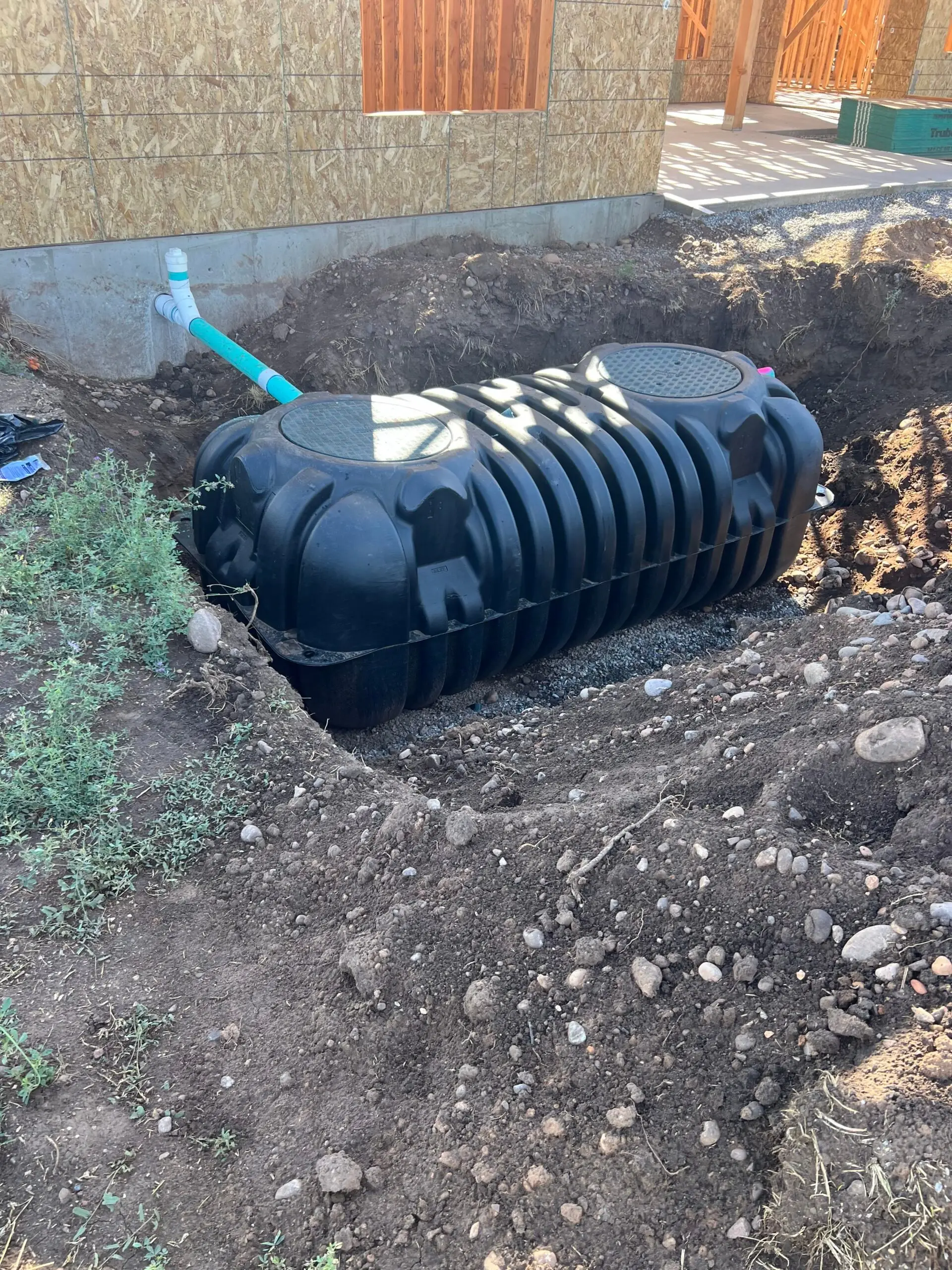
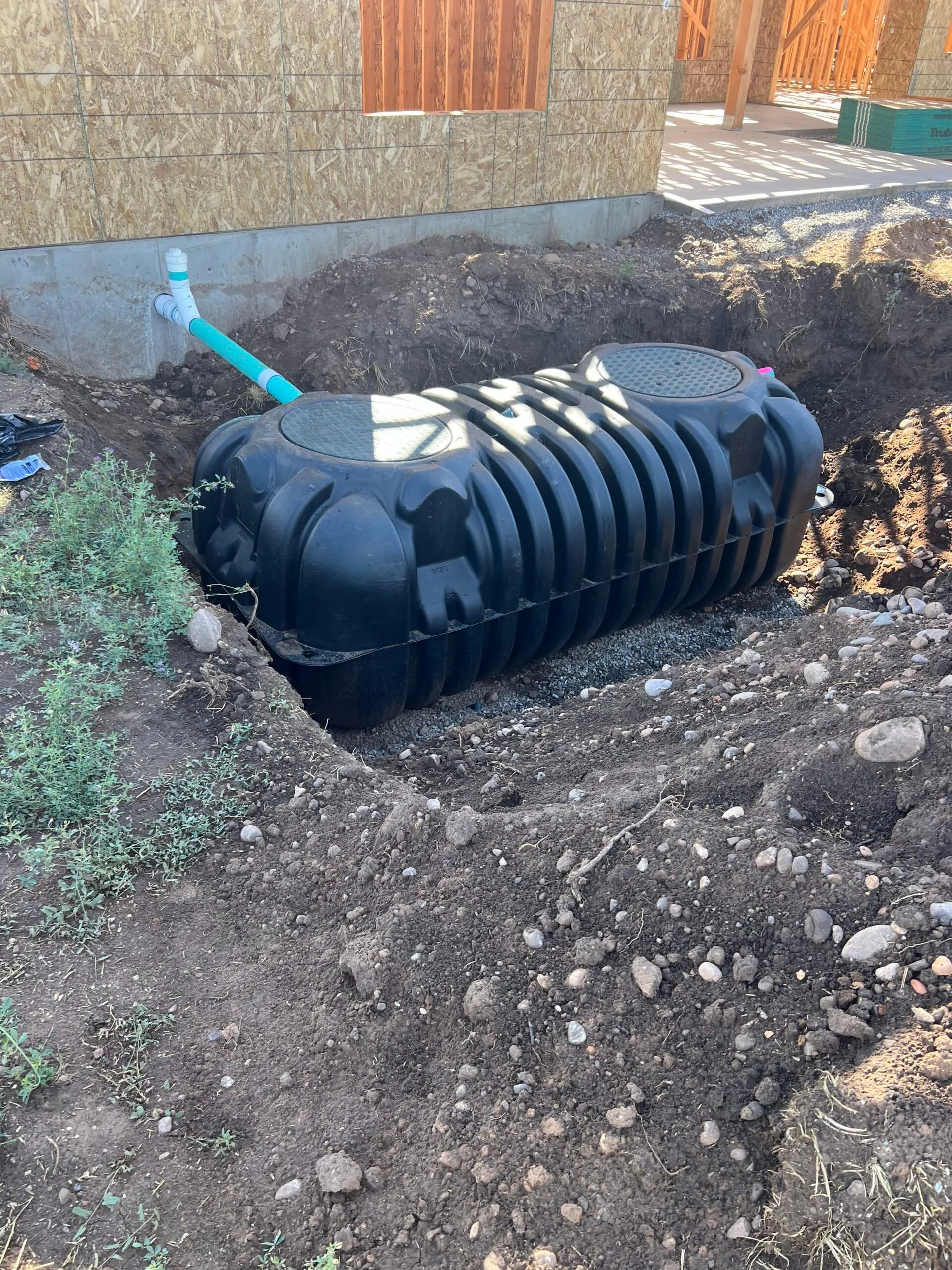
We handle excavation for the tank, the leach field trenches, and any distribution box or pump chamber the design requires. We install the tank, pipe, and drain field components, then coordinate with the county inspector for final approval.
Septic System Repair
Failing systems often show up as slow drains, wet spots in the yard, or sewage odors near the leach field. Some failures are repairable without full replacement. A distribution box may need replacement, a pipe may have collapsed, or the inlet baffle on the tank may have deteriorated.
We can dig to expose failing components, assess the damage, and make targeted repairs. When a partial repair will solve the problem, we’ll tell you. When it won’t, we’ll tell you that too.
Septic System Replacement
Older systems in the Ogden area, particularly those installed in the 1970s and 1980s, were often built to standards that don’t meet current requirements. A failing system in a home that’s changed hands a few times may have components that were never upgraded.
Replacing a septic system involves abandoning the old tank (pumping it out and filling it in), removing or reusing the drain field area, and installing a new system to current Weber County specifications. In some cases, a failed drain field means the new system goes in a different location on the property.
Perc Testing Coordination
A perc test, short for percolation test, measures how quickly your soil absorbs water. It’s required before any septic permit is issued. Weber County Health Department oversees this process in Weber County; the Utah Division of Water Quality also has a role through UDEQ.
We can coordinate the perc test through a certified soil scientist and attend the test to understand the results firsthand. This helps us design the system correctly and avoid surprises during the permit review.
Septic System Types in Northern Utah
Conventional Gravity Systems
Gravity systems are the simplest and least expensive option. Effluent flows from the house to the septic tank by gravity, then to a distribution box, then out through perforated pipe in a gravel-filled trench. They work well in soil with good absorption rates and adequate slope.
Most rural properties in Weber and Morgan counties that have decent sandy loam or loamy soil can use a conventional system, which is the most affordable option.
Pressure Distribution Systems
When the site is relatively flat or soil absorption is marginal, a pressure distribution system doses effluent to the leach field in controlled amounts rather than letting it flow by gravity. A pump chamber and timer control the distribution, which allows the drain field to rest between doses.
These are more expensive than gravity systems due to the pump and electrical components, but they extend the life of the drain field significantly.
Mound Systems
Mound systems are required when the seasonal high water table is too shallow or when soil conditions won’t support a conventional drain field. Effluent is pumped up into an engineered mound of fill material above the natural grade.
Mound systems are common in lower-elevation areas of Weber County near the Great Salt Lake basin, where soils can be wet or extremely tight. They cost more to install and maintain, but they’re the correct solution when soil conditions require it.
ATUs (Advanced Treatment Units)
For properties near sensitive waterways or in areas where standard systems don’t meet nutrient reduction requirements, advanced treatment units provide an additional level of treatment before effluent reaches the drain field. Weber County or Morgan County may require these in specific zones.
The Weber County Septic Permit Process
Getting a septic permit in Weber County involves several steps. Understanding the timeline upfront avoids frustration.
- Perc test and soil evaluation, coordinated through a certified soil scientist. Cost: $750-$1,900 depending on site.
- System design prepared by the contractor or a licensed engineer, based on perc test results.
- Permit application to Weber County Health Department. Fee: $535 plus $40 UDEQ fee, totaling $575.
- County review and permit issuance. This typically takes 2-4 weeks.
- Excavation and installation, with county inspection at rough grade before backfill.
- Final backfill and site grading, followed by final inspection.
The full timeline from perc test to final inspection is typically 4-8 weeks. Most of that is permit processing time, not construction time. The excavation and installation work itself takes 3-5 days.
Northern Utah Soil Considerations
Soil in Northern Utah varies a lot depending on where you are on the valley and what elevation you’re at.
Properties on the valley floor west of I-15, areas like West Haven, West Weber, or Hooper, often have tight lacustrine soils deposited by ancient Lake Bonneville. These soils are slow to absorb and may require engineered systems or mound systems.
Foothill properties in Eden, Liberty, Huntsville, or along the Monte Cristo corridor tend to have rockier soil, which presents different challenges: percolation can be good, but installing drain field trenches in fractured rock requires breaking equipment and careful work.
Mid-valley areas with sandy loam or loamy soils are typically the best candidates for conventional gravity systems.
We factor all of this into the system design and make sure the solution matches the actual site conditions, not a generic design copied from a previous project.
Repair or Replace: How to Decide
If your system is under 20 years old and was properly maintained, repair is often worth pursuing. A failed distribution box or a single section of collapsed pipe can be fixed without replacing the whole system.
If the system is over 25 years old, the tank is showing structural issues, the drain field is fully saturated and not recovering, or you’ve been pumping more than twice a year just to keep things moving, replacement is usually the better investment. Continuing to repair an end-of-life system often costs more over 3-5 years than replacing it outright.
We’ll give you our honest read after assessing the system. We’re not going to push replacement if a repair will solve the problem.
Septic System Costs in Utah
Septic system costs vary significantly based on your property’s specific conditions. The main factors that drive pricing are:
- System type — conventional gravity systems are the most affordable; pressure distribution and mound systems cost more due to additional components and engineering
- Soil conditions — tight clay soils or rocky ground require more excavation work and may dictate a more complex system design
- Property layout — longer runs from the house to the drain field, difficult terrain, or limited access increase the scope of work
- Permit and testing requirements — some sites need more extensive soil evaluation or engineered designs
Government and third-party fees are separate from our installation costs:
Perc test coordination: $750-$1,900 depending on number of test holes and site conditions.
Weber County permit fees: $575 total ($535 application plus $40 UDEQ).
We include all applicable fees in your quote so the total cost is clear upfront. Get a free estimate based on your specific property and soil conditions.
Why AccuRite for Septic Work in Northern Utah
Septic installation is excavation work. The quality of the trench, the slope, the bedding material, and the backfill and compaction all determine how long the system performs. We bring the same precision to a septic project that we bring to a foundation dig or a residential excavation.
We also handle related work: underground utility connections, grading and site prep, and hookups to water lines. For a new rural home build, we can often handle the septic, the utilities, and the site prep as a single coordinated scope.
Get a Quote
We serve Weber, Davis, and Morgan counties — including properties near Ogden, Roy, and Brigham City. Give us a call and we’ll discuss your site, walk through the permit requirements for your specific location, and give you a clear quote for the full project scope.
What Customers Say About Our Septic
"AccuRite installed our septic system in Huntsville. Shawn walked us through the entire process from the perc test to the final inspection. Everything passed on the first try. Very professional and reasonably priced."
Jennifer H.
Google ReviewSeptic FAQs
How much does a septic system cost in Utah?
What is the septic permit process in Weber County?
How much does a perc test cost in Utah?
How long does septic system installation take?
Should I repair or replace my septic system?
What are the soil requirements for a septic system in Utah?
Related Services
Residential Excavation
Foundation digs, basement excavation, grading, and site preparation for homes across the Wasatch Front.
Learn moreUnderground Utilities
Water lines, sewer lines, storm drain, gas, and utility trenching for residential and commercial projects.
Learn moreGrading & Land Clearing
Land grading, lot clearing, and site preparation for residential and commercial construction projects.
Learn moreAreas We Serve for Septic
Ready to Start Your Project?
Call us today for a free estimate or fill out our quick form.