
Why Soil Stabilization Matters for Utah Construction
If you have ever watched a sidewalk heave up, seen a basement wall crack, or noticed a driveway that seems to be slowly sinking on one end, you have seen the result of soil that was not properly stabilized before construction. In Utah, this is not an occasional problem. It is something excavation contractors deal with on almost every job.
The soils along the Wasatch Front have characteristics that make stabilization a real consideration, not a line item to skip when the budget gets tight.
What Soil Stabilization Actually Is
Soil stabilization is the process of improving the engineering properties of soil so it can support loads without settling, shifting, or failing. The goal is to create a consistent, predictable foundation for whatever is being built on top of it.
Unstabilized soil can compress unevenly under load, expand and contract with moisture changes, or move laterally when pressure is applied to it. All of these behaviors cause problems for structures, pavement, and utilities over time.
Stabilization is not the same as compaction, though compaction is part of it. Stabilization may involve modifying the soil’s composition, reinforcing it, or changing how water interacts with it.
Utah’s Clay Soil Problem
The valley floor in the Ogden area, and much of the Wasatch Front from Ogden down to Salt Lake, sits on soils deposited by Lake Bonneville, the ancient lake that covered much of the Great Basin thousands of years ago. Those lake-bottom soils are fine-grained, silty, and clay-heavy.
Clay is the problem soil for construction. It expands significantly when it gets wet and shrinks when it dries out. This behavior is called shrink-swell, and it is hard on anything built on top of it. Foundations crack, slabs heave, retaining walls lean, and roads develop frost heave damage.
On the bench areas east of Ogden, soils are typically coarser and better-draining, but you often encounter fill from previous development sitting on top of native material. That fill may or may not have been properly placed. When we excavate on the bench, we take nothing for granted about what is under the existing grade.
Layton and the Davis County corridor have similar clay conditions in the lower-elevation areas, particularly as you move toward the lake side of I-15. Our crews regularly handle soil stabilization work in Clearfield, Kaysville, Farmington, Syracuse, and throughout the Weber-Davis county line.
Methods for Stabilizing Soil
Mechanical Compaction
The most common method is mechanical compaction: using equipment to press soil into a denser state that resists settlement. This is done in lifts, meaning you compact layers of soil progressively as you fill rather than dumping everything in and running a plate compactor over the top.
Lift thickness and compaction effort depend on the soil type and what is being built on it. A slab-on-grade foundation has different requirements than a road subbase. We use compaction testing to confirm that the soil has reached the required density before the next lift goes in.
Chemical Stabilization
For problem clay soils, mechanical compaction alone is sometimes not enough. Chemical stabilization uses materials like lime, Portland cement, or fly ash mixed into the soil to change its properties.
Lime treatment is common for clay-heavy soils in northern Utah. Lime reacts with the clay particles and reduces the plasticity of the soil, meaning it is less prone to swelling with moisture changes. It also typically increases load-bearing capacity.
This is not a DIY fix. The mix design, mixing depth, and curing requirements are all engineered for the specific soil and application.
Geotextile Fabric
Geotextile fabric is placed between layers of material to separate them, reinforce them, or filter water between them. On a project where soft subgrade is being covered with aggregate base, a geotextile layer prevents the aggregate from punching down into the soft soil and losing its structural function over time.
Fabric is also used under riprap and in drainage applications where you want water to pass through but do not want fines to migrate. It is a relatively inexpensive step that extends the life of the work above it significantly.
When Stabilization Is Required
Foundation Work
Any foundation sitting on clay-heavy soil should involve a geotechnical evaluation. An engineer may specify subgrade preparation requirements, lime treatment, or imported structural fill in place of native material. Skipping this step because the soils look okay to the eye is how foundations end up cracking.
Retaining Walls
Retaining walls depend on stable soil behind and beneath them. A wall built on unstabilized backfill will move over time. The forces involved in holding back earth are significant, and they transfer into the foundation and base of the wall. If that base is soft or variable, the wall will show it eventually.
Roads and Driveways
Road subbase preparation is where stabilization pays for itself most visibly. A driveway or rural road built on compacted native clay without proper base preparation will develop ruts, potholes, and surface breaks as the clay beneath it moves seasonally. A properly prepared subbase with the right material and compaction holds up through years of freeze-thaw cycles.
Drainage and Grading
Grading work that redirects water across a site needs stable soil that will not erode when water runs over it. Swales, drainage ditches, and catch basins all depend on the surrounding soil being stable enough to hold its shape.
What Happens When You Skip It
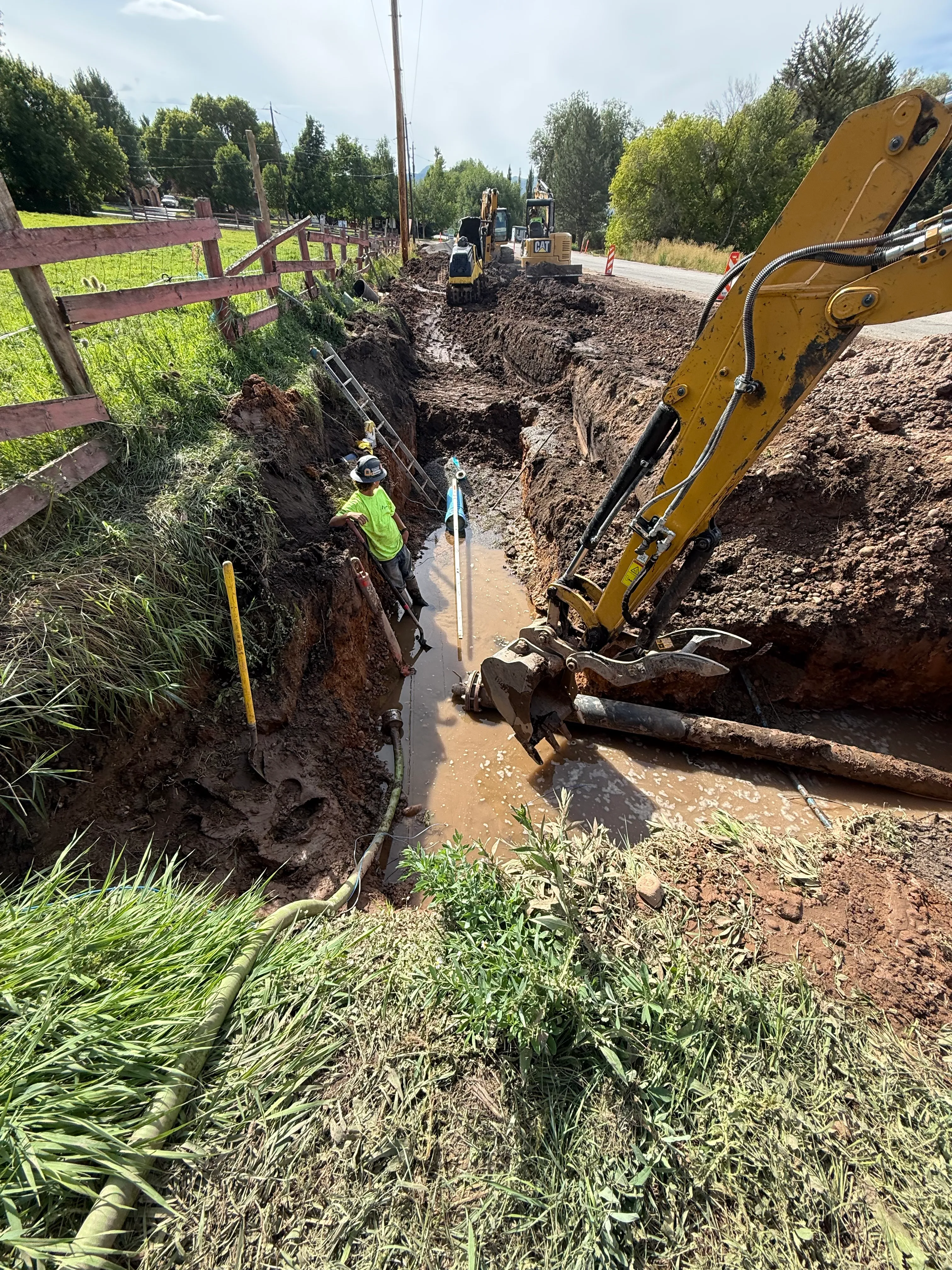
The consequences are not always immediate, which is part of why stabilization sometimes gets skipped. A building can look fine for a year or two before the settlement shows up as cracks. A driveway can hold up through a few seasons before the subbase failure becomes obvious.
By that point, the fix is always more expensive than doing it right the first time. You may be cutting out and replacing a slab that has moved, rebuilding a wall that has leaned, or regrading a drainage channel that has silted in because the sides eroded.
The same delayed failure happens under roadways when organic material is left in the subgrade — it decomposes, and the surface settles into the void it leaves. We covered that in lot clearing and grading before a road goes in.
If you are planning a construction project in Ogden, Layton, or anywhere in northern Utah and want to understand what soil conditions might mean for your site, contact AccuRite. We can walk you through what we typically encounter in your area and what preparation your project will likely need.